High mast lighting is designed for large outdoor areas where conventional street lights cannot provide enough coverage. It mounts several powerful luminaires on one tall pole to illuminate highways, ports, airports, parking areas, industrial yards, public squares, and sports facilities. This guide explains what a high mast lighting system is, how it works, and when it is suitable.
What Is High Mast Lighting?
High mast lighting is a high-elevation system that uses a tall steel pole to support multiple LED floodlights. Unlike a standard street light pole, which illuminates a limited section of road, a high mast light pole covers a much wider area from fewer installation points.
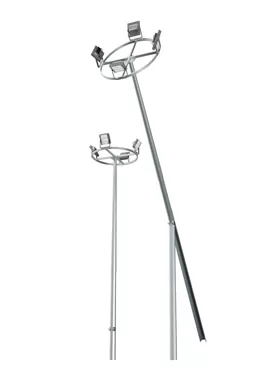
The luminaires are installed on a ring or headframe at the top of the mast. Their wattage, beam angle, quantity, and aiming direction are selected according to site dimensions, target lux levels, uniformity, and glare limits. Pole height, foundation design, wind resistance, controls, and maintenance access must therefore be planned as one complete system.
Commercial high mast poles are often approximately 15 to 40 meters tall, although the final height depends on the project. Phoebus Lighting provides customizable configurations within this range for different site areas and lighting standards.
What Components Make Up a High Mast Lighting System?
A complete high mast lighting system normally includes:
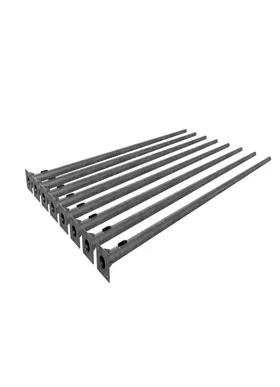
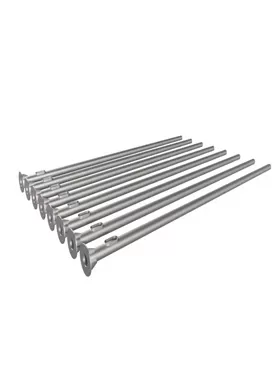
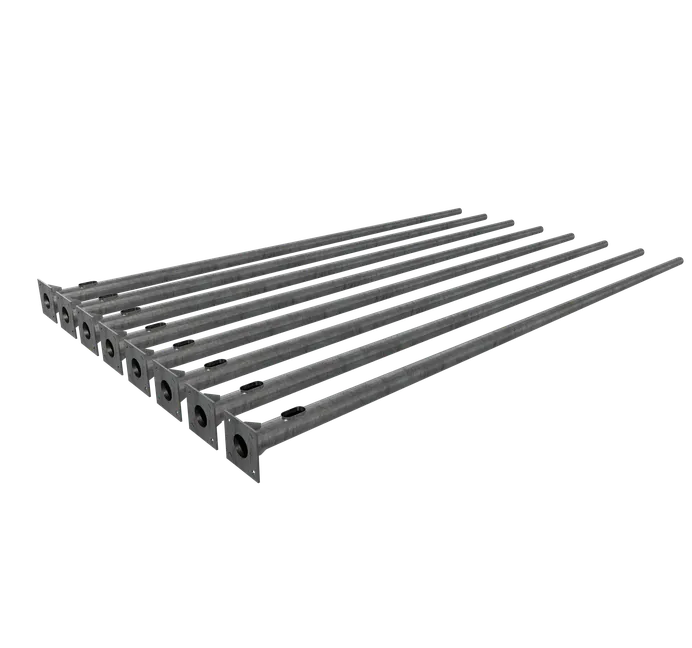
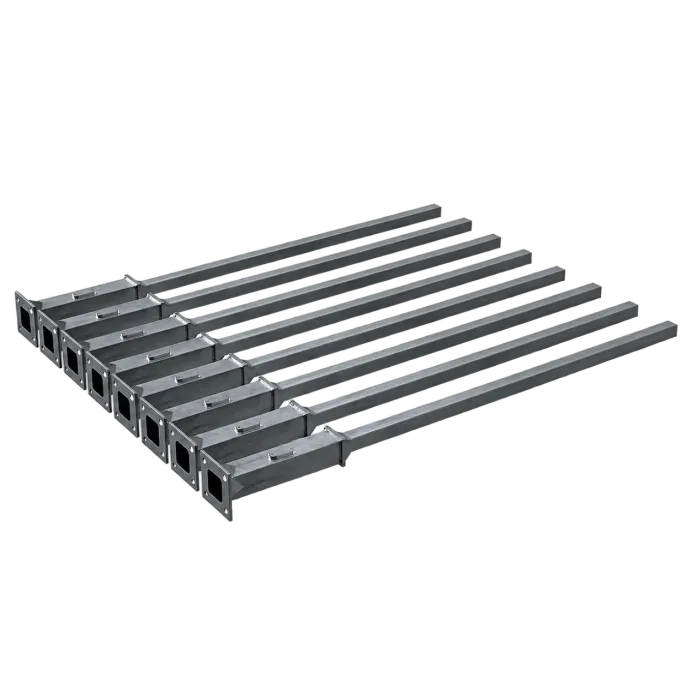
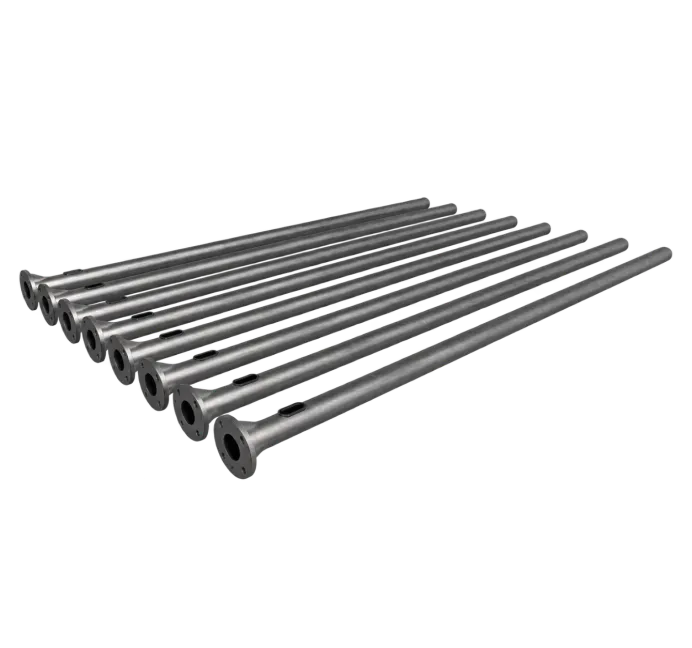
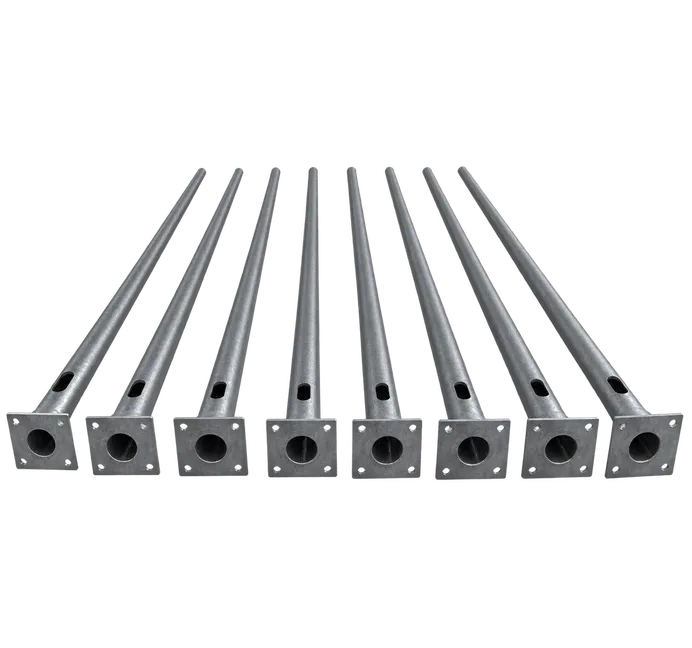
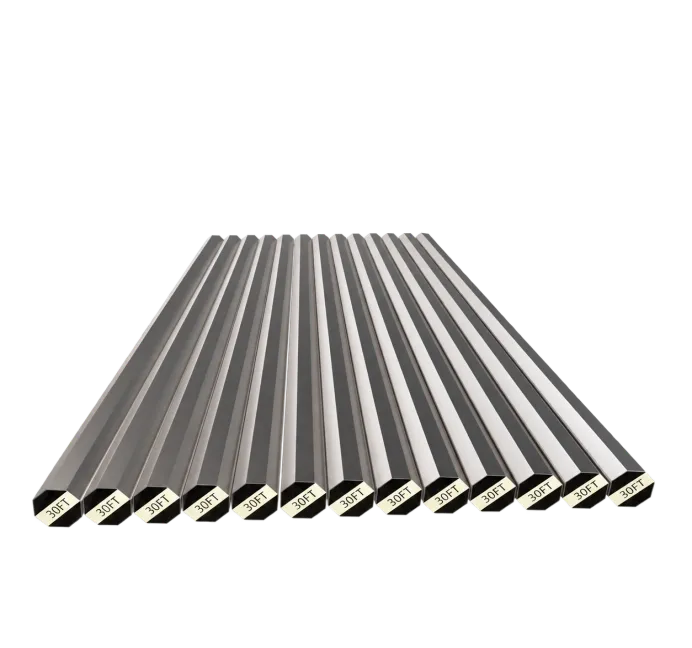
High mast pole: A tapered steel structure engineered for fixture loads, wind, and outdoor exposure.
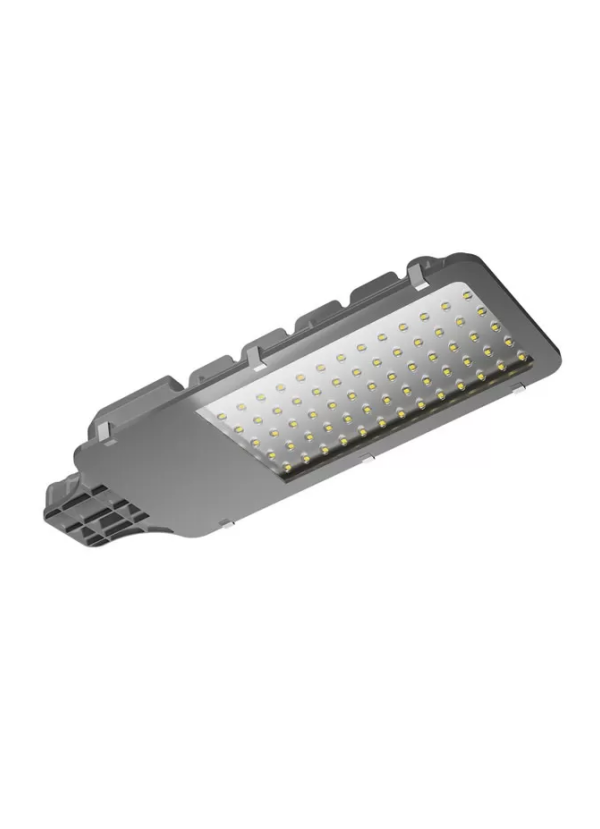
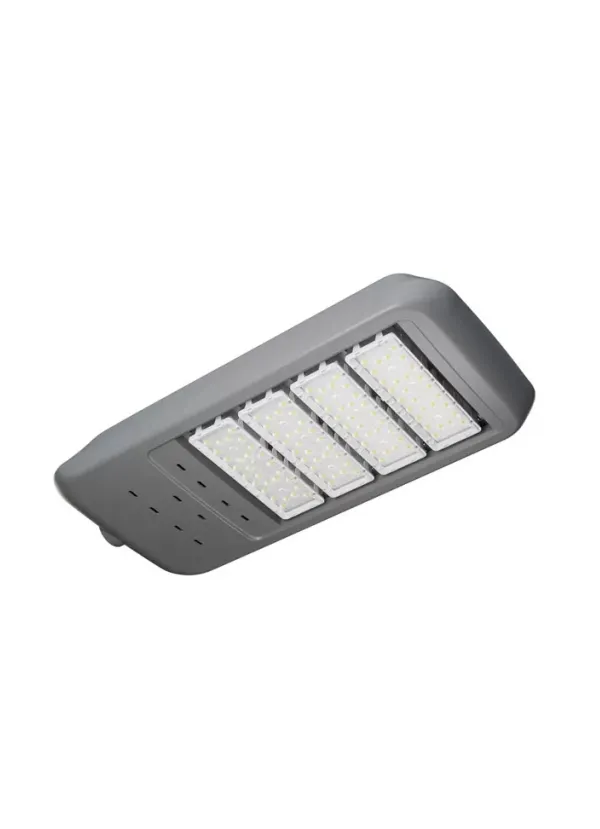
LED luminaires: High-output fixtures with optical lenses that direct light toward the target area.
Luminaire ring: The frame that holds several fixtures at the top of the pole.
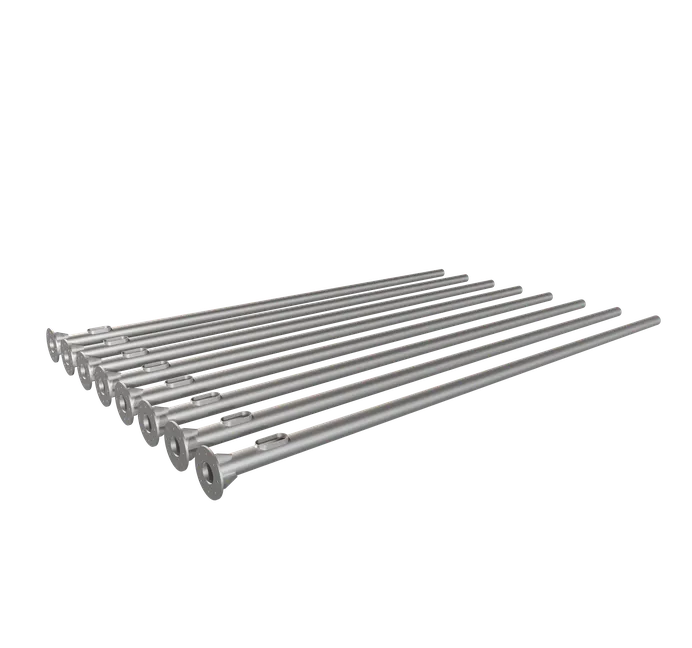
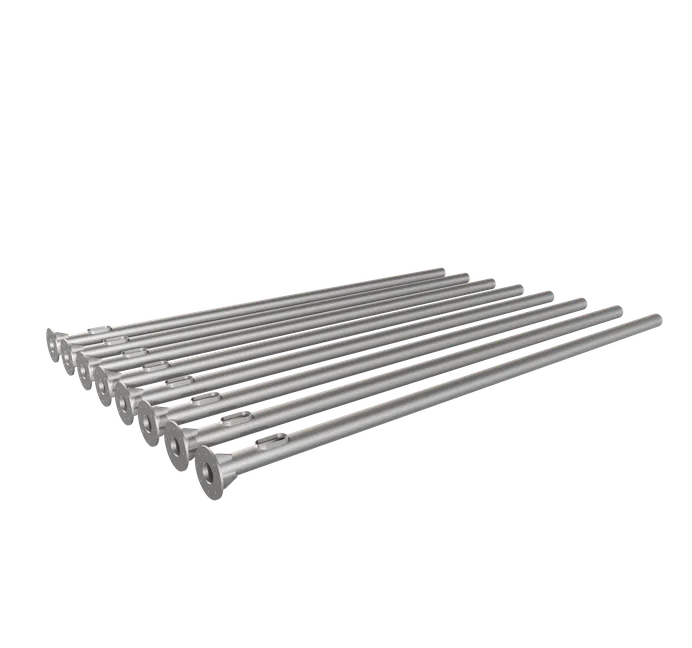
Foundation and anchor bolts: A reinforced base sized for pole height, soil conditions, and structural load.
Electrical controls: Cables, breakers, surge protection, timers, photocells, or smart controllers.
Maintenance system: A fixed head, lowering mechanism, or safety cage ladder.
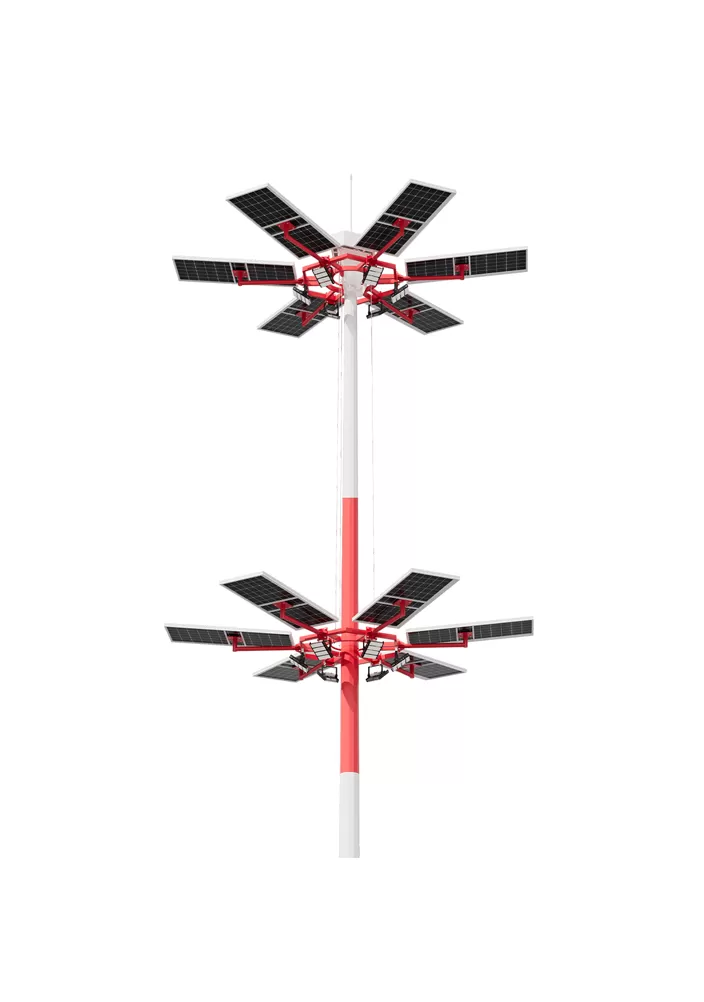
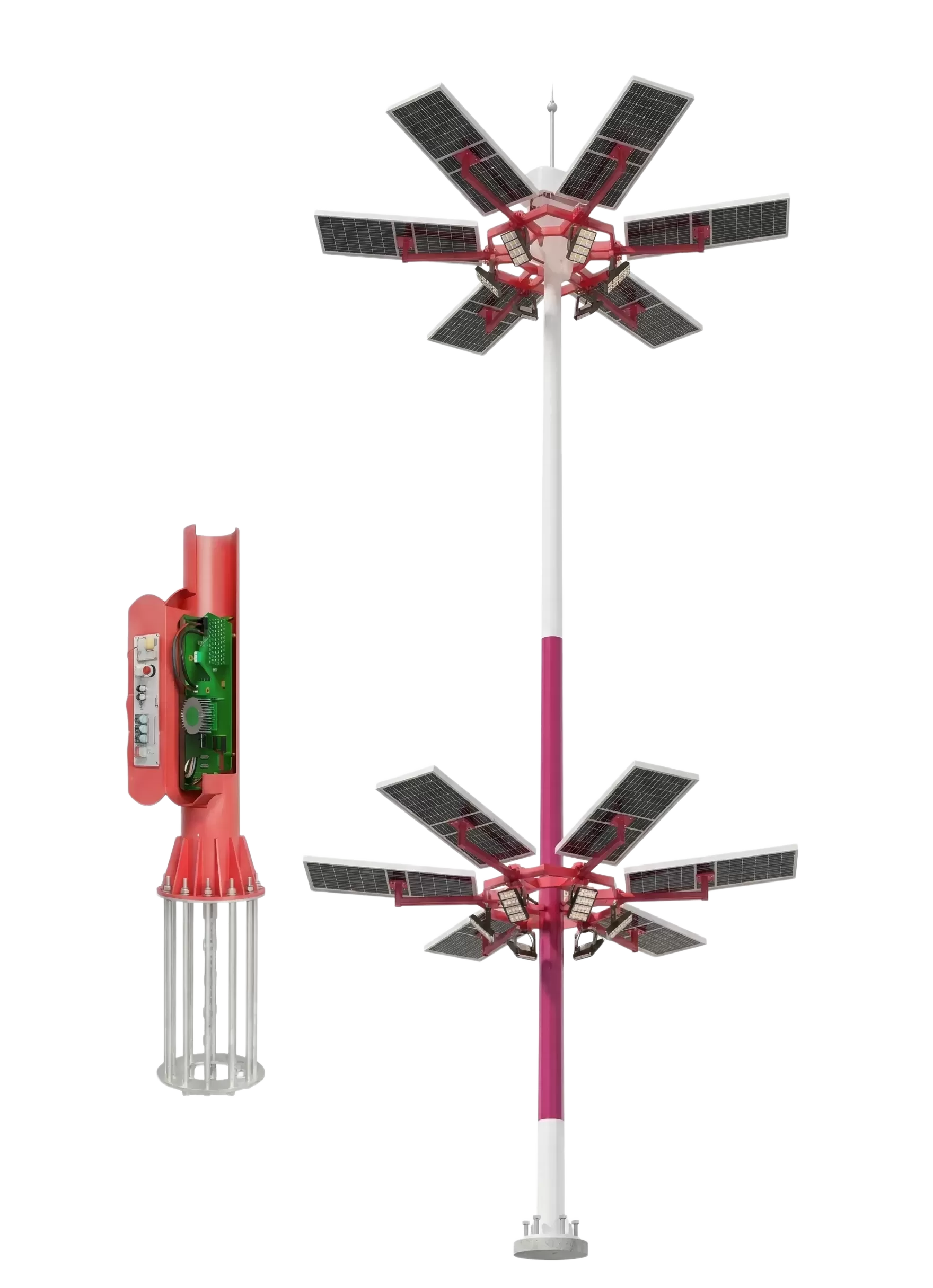
Solar equipment: Solar panels, batteries, and a controller for an off-grid system.
These components should be evaluated together. Fixture weight, wind load, cable routing, foundation requirements, and maintenance access all influence the final high mast lighting design.
How Does a High Mast Lighting System Work?
A grid-powered high mast receives electricity through underground cables connected to a control cabinet. A timer, photocell, or centralized controller switches the lights according to the operating schedule. Electricity then travels through internal pole wiring to the luminaires.
The LED high mast lights convert electricity into high-output illumination. Optical lenses control the spread and direction of the light so the target area receives suitable brightness and uniformity. Accurate aiming is essential because poor alignment may create dark areas, glare, or wasted spill light.
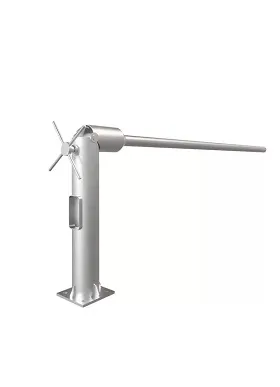
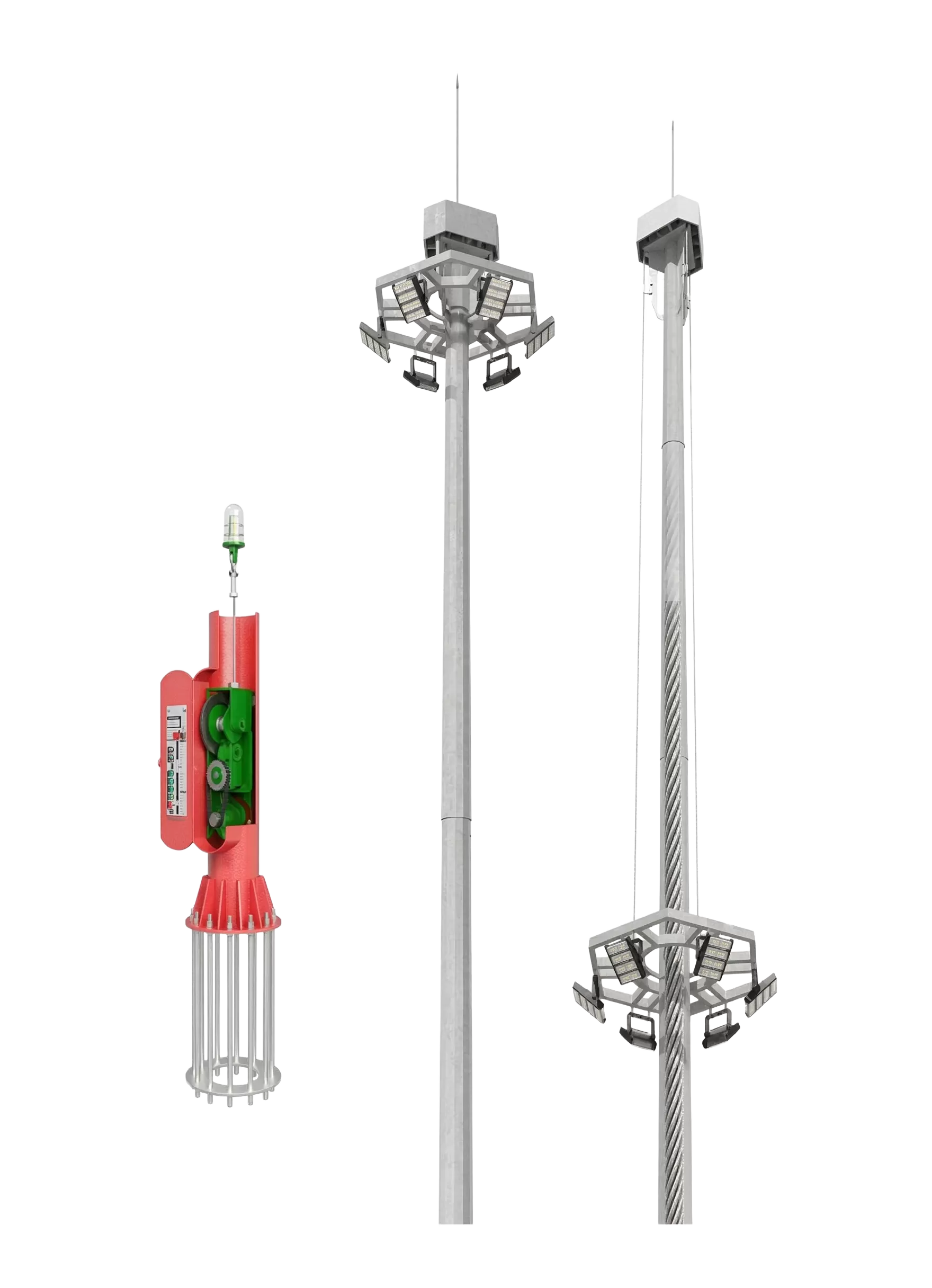
In a high mast with lifting system, a winch and wire-rope assembly lowers the luminaire ring to ground level for inspection and replacement. A solar high mast works differently: solar panels generate electricity during the day, batteries store it, and the controller supplies power to the LED lights at night.
What Types of High Mast Lighting Systems Are Available?
Fixed-Head High Mast Lighting
The luminaire assembly remains at the top of the pole. Maintenance normally requires a lift platform or another form of elevated access. This design may suit locations where maintenance vehicles and lifting equipment are already available.
High Mast with Lifting System
The luminaire ring can be lowered to ground level, making inspection, cleaning, and fixture replacement safer and more efficient. It is commonly selected for highways, plazas, ports, logistics areas, and other sites where reducing work at height is important.
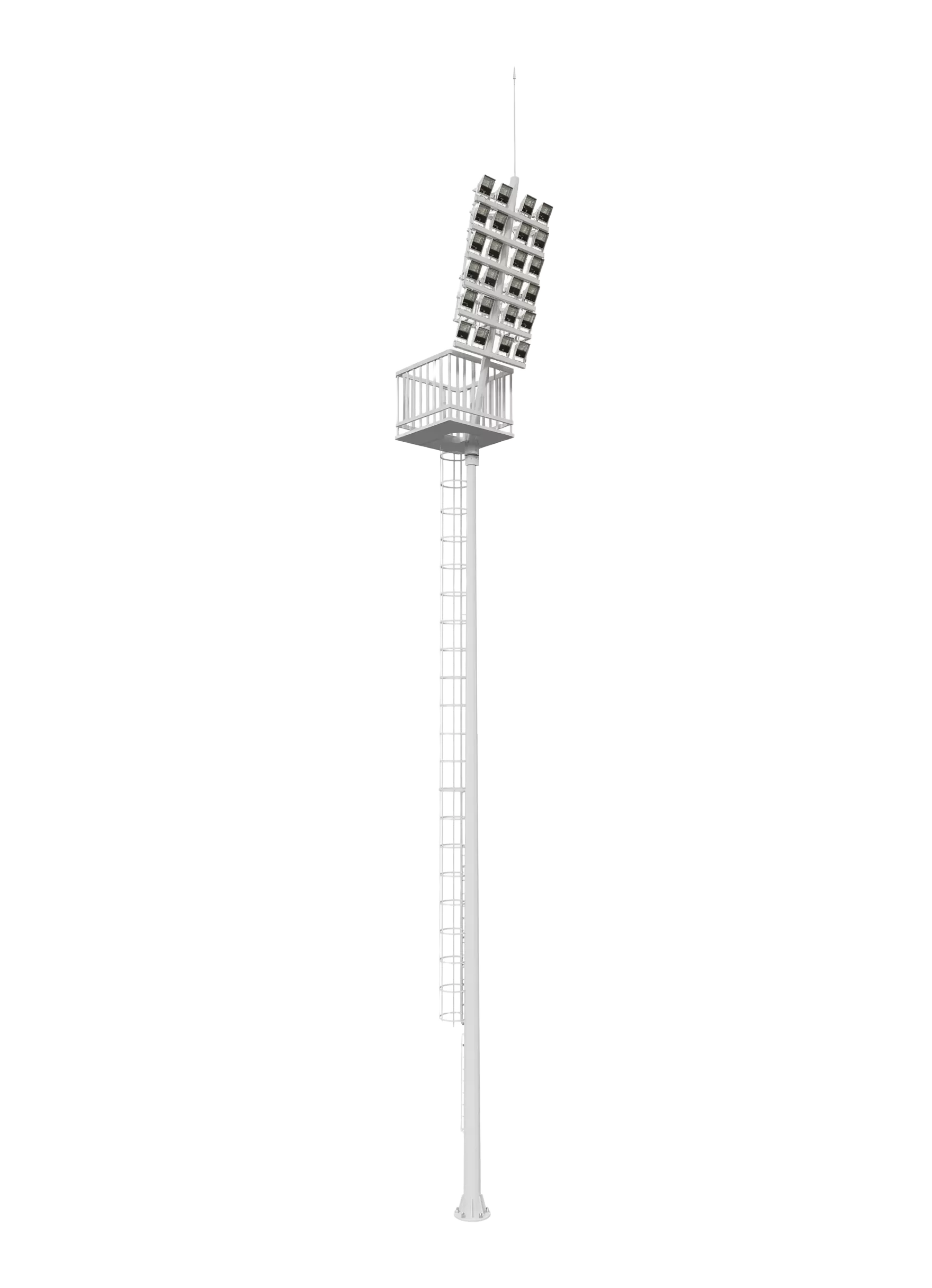
High Mast with Safety Cage Ladder
A high mast with safety cage ladder gives trained personnel direct access to the upper platform. This configuration can simplify inspections when a lowering ring is not required, although proper fall protection, access control, and maintenance procedures are still essential.
Solar High Mast Lighting
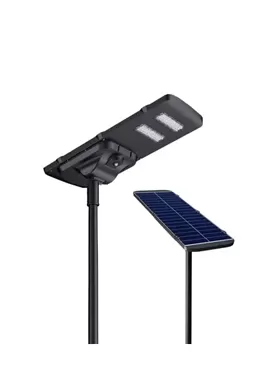
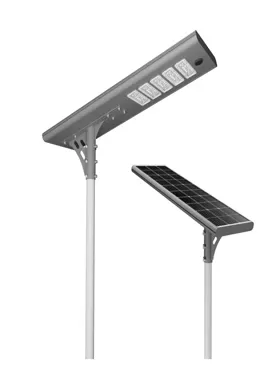
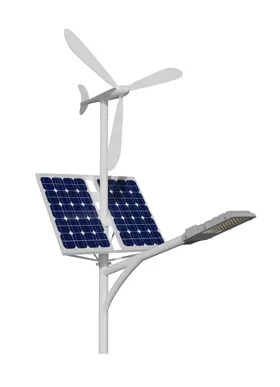
A solar high mast combines photovoltaic panels, batteries, a controller, and LED floodlights. It is useful for remote sites or projects where trenching and grid connection are difficult. Solar panel and battery capacity should be calculated according to lamp power, operating hours, local sunlight, and required backup time.
Phoebus Lighting offers solar high mast systems, high masts with lifting systems, and high masts with safety cage ladders for different energy and maintenance requirements.
Where Is High Mast Lighting Commonly Used?
High mast lighting is most useful where a large, open area needs broad and relatively uniform illumination. Typical high mast lighting applications include:
Highway interchanges, toll plazas, service areas, and large junctions
Airport aprons, cargo zones, and aircraft parking areas
Ports, container terminals, logistics yards, and railway facilities
Industrial plants, mines, warehouses, and outdoor storage areas
Large parking lots, transport terminals, and public squares
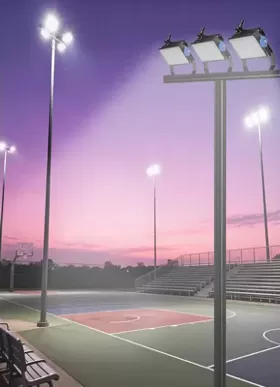
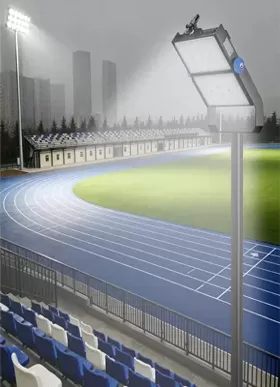
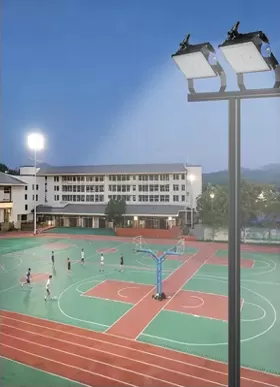
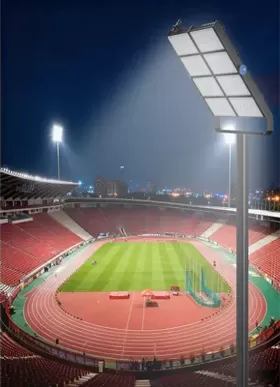
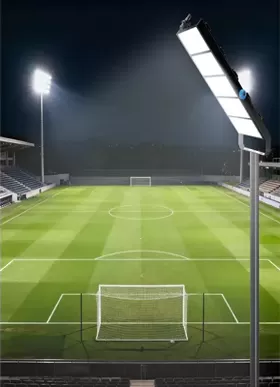
Sports grounds, training fields, and stadium surroundings
Each application needs a different design. Highways prioritize visibility and glare control, ports require safe lighting for cargo operations, and sports facilities may need higher illuminance and stronger vertical lighting. Photometric calculations should therefore be based on the actual activity, site layout, operating hours, and applicable lighting standards.
What Are the Advantages and Limitations of High Mast Lighting?
Advantages of High Mast Lighting
Wide coverage: One mast can illuminate a large area and reduce the number of pole locations.
Better uniformity: Multiple luminaires and suitable optical distributions can limit dark spots.
Fewer obstructions: Fewer poles can improve vehicle movement in ports, yards, and parking areas.
Flexible design: Height, wattage, beam angle, fixture quantity, controls, and maintenance access can be customized.
Easier maintenance: A lowering system can bring the luminaire ring to ground level for servicing.
Limitations of High Mast Lighting
Higher initial cost: The mast, foundation, luminaires, control equipment, and installation machinery require a larger budget.
Engineering complexity: Wind load, soil conditions, structural strength, and lighting performance must be calculated.
Glare risk: Incorrect optics or aiming may reduce visual comfort and safety.
Specialized maintenance: Fixed-head and ladder-access systems require trained personnel and suitable equipment.
Potential light spill: Poorly designed systems may illuminate areas outside the intended project boundary.
A photometric design, structural calculation, and life-cycle cost review can determine whether high mast lighting is more suitable than installing multiple conventional light poles.
Frequently Asked Questions About High Mast Lighting
How tall is a high mast light pole?
High mast light poles are commonly around 15 to 40 meters tall. The correct height depends on the coverage area, lux requirement, fixture output, wind conditions, site layout, and nearby structures.
How many LED lights are installed on a high mast?
The quantity varies by project. It is calculated according to the target area, pole height, luminaire wattage, beam angle, required uniformity, and lighting redundancy.
What is the difference between high mast lighting and street lighting?
High mast lighting uses taller poles and multiple high-output fixtures to illuminate large open areas. Street lighting normally uses shorter poles placed at regular intervals along roads, sidewalks, and smaller public spaces.
Can high mast lights be lowered for maintenance?
Yes. A high mast with lifting system uses a winch and cable mechanism to lower the luminaire ring to ground level. Fixed-head models normally require an aerial work platform or other elevated access equipment.
Can a high mast lighting system use solar power?
Yes. A solar high mast uses solar panels, batteries, a charge controller, and LED floodlights. The system must be sized according to energy consumption, local sunlight, operating hours, and the required backup time during cloudy weather.
What information is needed for a high mast lighting quotation?
Provide the site dimensions, project location, application, required lux level, operating hours, power source, preferred pole height, local wind speed, soil information, and maintenance preference. Phoebus Lighting can then recommend a suitable pole, fixture layout, foundation concept, and control method.
Conclusion
High mast lighting is a practical solution for highways, ports, airports, industrial facilities, parking areas, and other expansive outdoor spaces. Its performance depends on coordinated structural design, optical distribution, electrical control, foundation engineering, glare management, and maintenance access.
Before purchasing a high mast lighting system, define the required coverage, lux level, operating schedule, site conditions, power source, and maintenance method. Phoebus Lighting supplies customizable solar high mast, lifting-system, and safety cage ladder solutions for different technical and operational requirements.

 English
  français
  Deutsch
  Español
  русский
  português
  العربية
  Afrikaans
  עברי
עברי  Latinae
  Pilipino