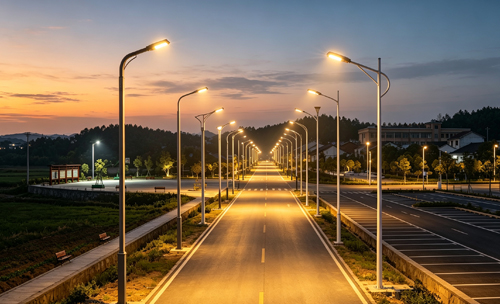
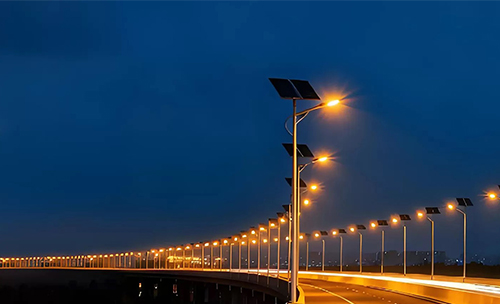
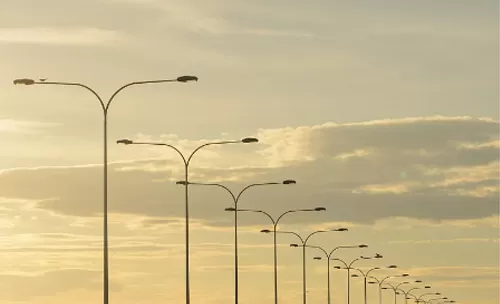
Selecting the correct light pole height is essential for achieving safe, uniform and cost-effective outdoor lighting. A pole that is too short may create limited coverage and dark areas, while an unnecessarily tall pole can increase equipment, foundation and maintenance costs.
The correct height depends on the road width, lighting application, luminaire power, beam angle, pole spacing and local wind conditions. Phoebus Lighting recommends evaluating these factors together rather than selecting a pole based only on a standard height.
This guide compares common 6m, 8m, 10m, 12m and 15m light poles and explains where each option is normally used.
Why Light Pole Height Matters
Light pole height directly affects the size of the illuminated area. A taller pole can distribute light across a wider surface, while a shorter pole normally provides more concentrated lighting.
However, height also influences:
· Luminaire wattage
· Pole spacing
· Foundation dimensions
· Pole wall thickness
· Wind-load resistance
· Installation equipment
· Maintenance requirements
The correct light pole size should therefore be selected according to the complete lighting layout.
A taller pole does not automatically improve a project. If the fixture output or optical distribution is unsuitable, increasing the height may reduce ground-level illumination. Buyers should review both the pole and luminaire specifications before confirming the design.
When to Choose a 6m Light Pole
A 6m pole is commonly used for smaller outdoor areas where moderate lighting coverage is required.
Typical applications include:
· Residential streets
· Pedestrian paths
· Parks and gardens
· Community roads
· Small parking areas
· Commercial entrances
A 6 meter street light pole can provide comfortable lighting without creating excessive brightness or glare. It is also easier to install and maintain than taller poles.
Because the illuminated area is relatively limited, pole spacing is generally shorter. The exact spacing depends on the luminaire wattage, beam angle and required lux level.
A 6m street light pole is often suitable for narrow roads with low or moderate traffic. It may use a single short arm or a direct top-mounted luminaire.
For decorative areas, the pole can also be powder coated in black, grey, green or another customised color.
When to Choose an 8m Light Pole
An 8m pole is one of the most commonly selected options for urban and commercial lighting projects.
Typical applications include:
· Urban streets
· Residential developments
· Medium-sized parking lots
· Commercial roads
· Public squares
· Industrial access roads
Compared with a 6m pole, an 8m pole provides wider lighting coverage and may allow greater spacing between poles.
It is commonly paired with medium-power LED luminaires and can support either single-arm or double-arm configurations.
An 8m light pole is often a practical choice when buyers need more coverage than a residential pole can provide but do not require the size or cost of a 10m or 12m structure.
The wall thickness and foundation should still be designed according to local wind speed, fixture weight and bracket length.
When to Choose a 10m Light Pole
A 10m pole is widely used for main roads, industrial areas and large public lighting projects.
Typical applications include:
· Main urban roads
· Multi-lane streets
· Industrial parks
· Large parking areas
· Transport facilities
· Road intersections
A 10m road light pole can cover a broader area than 6m and 8m poles, making it suitable for wider roads and higher traffic volumes.
Because the pole carries the luminaire at a greater height, the fixture normally requires sufficient output and an appropriate optical distribution.
The pole structure may need:
· A larger bottom diameter
· Greater wall thickness
· A reinforced base plate
· Larger anchor bolts
· A deeper foundation
For double-arm applications, the additional fixture and bracket loads must be included in the structural calculation.
When to Choose a 12m Light Pole
A 12m pole is normally used for wide roads and large infrastructure projects requiring broad illumination coverage.
Common applications include:
· Major traffic roads
· Wide intersections
· Logistics centres
· Industrial facilities
· Large parking lots
· Highway entrances
A 12m pole can reduce the number of lighting points in some projects because each pole covers a larger area. However, the final spacing must be confirmed through lighting calculations.
The higher mounting position also creates greater structural demands. Wind pressure increases with height, especially when the pole supports long arms, large luminaires, solar panels or cameras.
When selecting a 12m pole, buyers should provide:
· Local basic wind speed
· Luminaire dimensions and weight
· Arm length
· Pole spacing
· Road width
· Required illumination level
Phoebus Lighting can adjust the pole diameter, steel grade and wall thickness according to these project conditions.
When to Choose a 15m Light Pole
A 15m pole is generally selected for large-scale outdoor lighting where wider coverage is required.
Typical applications include:
· Highways
· Major intersections
· Ports
· Transport terminals
· Large industrial sites
· Large open parking areas
A 15m pole is taller and heavier than standard urban road poles. It normally requires specialised lifting equipment during installation and a larger reinforced concrete foundation.
The pole may be manufactured in multiple sections to simplify transportation. These sections can be connected through slip joints or flanges, depending on the design.
A 15m pole should not be selected only to increase brightness. The luminaire distribution must be suitable for the mounting height, and glare should be controlled.
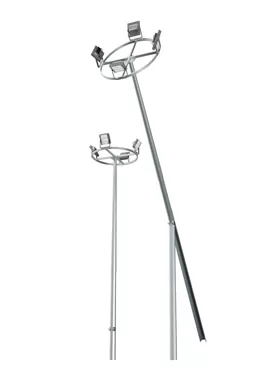
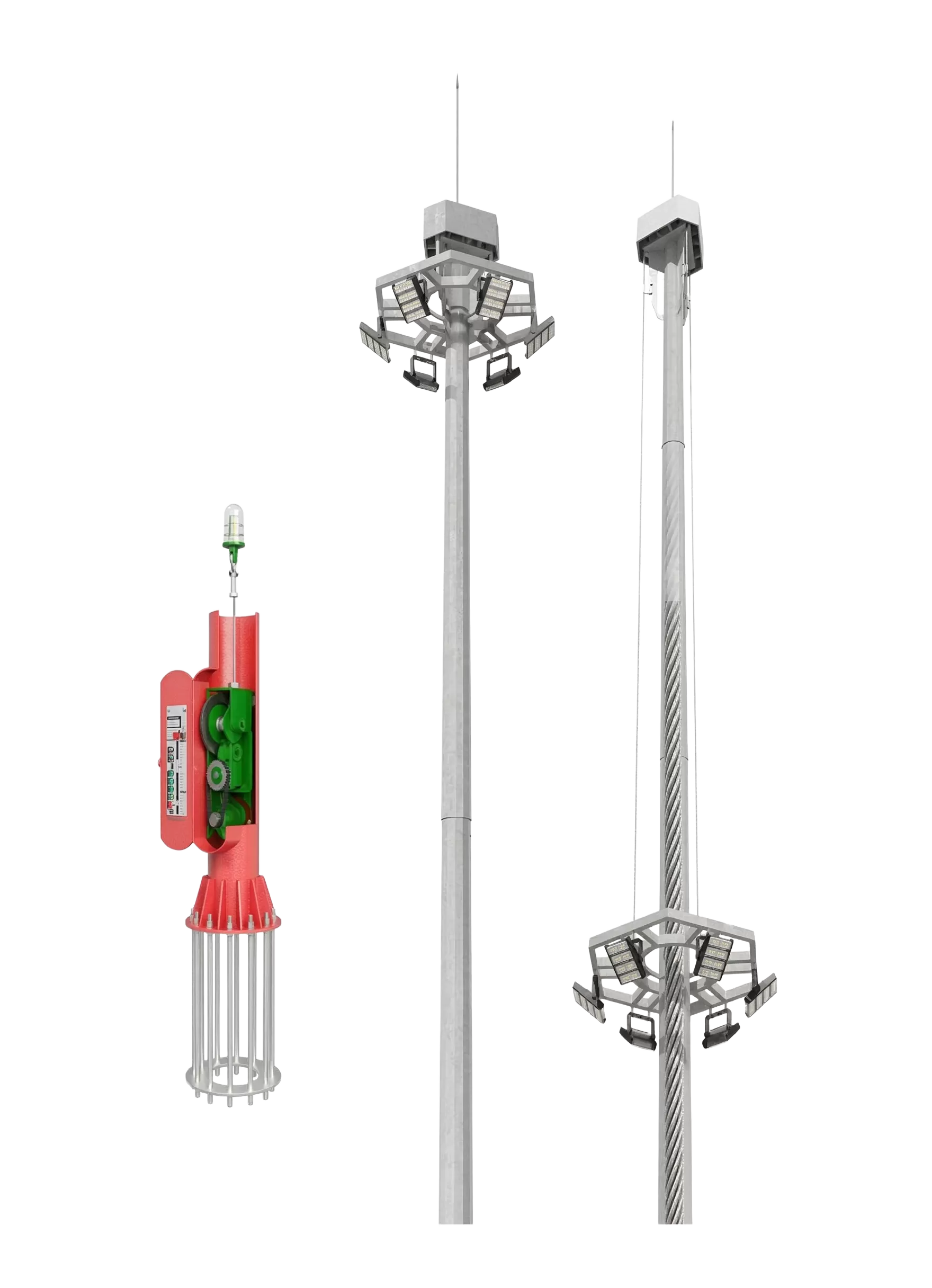
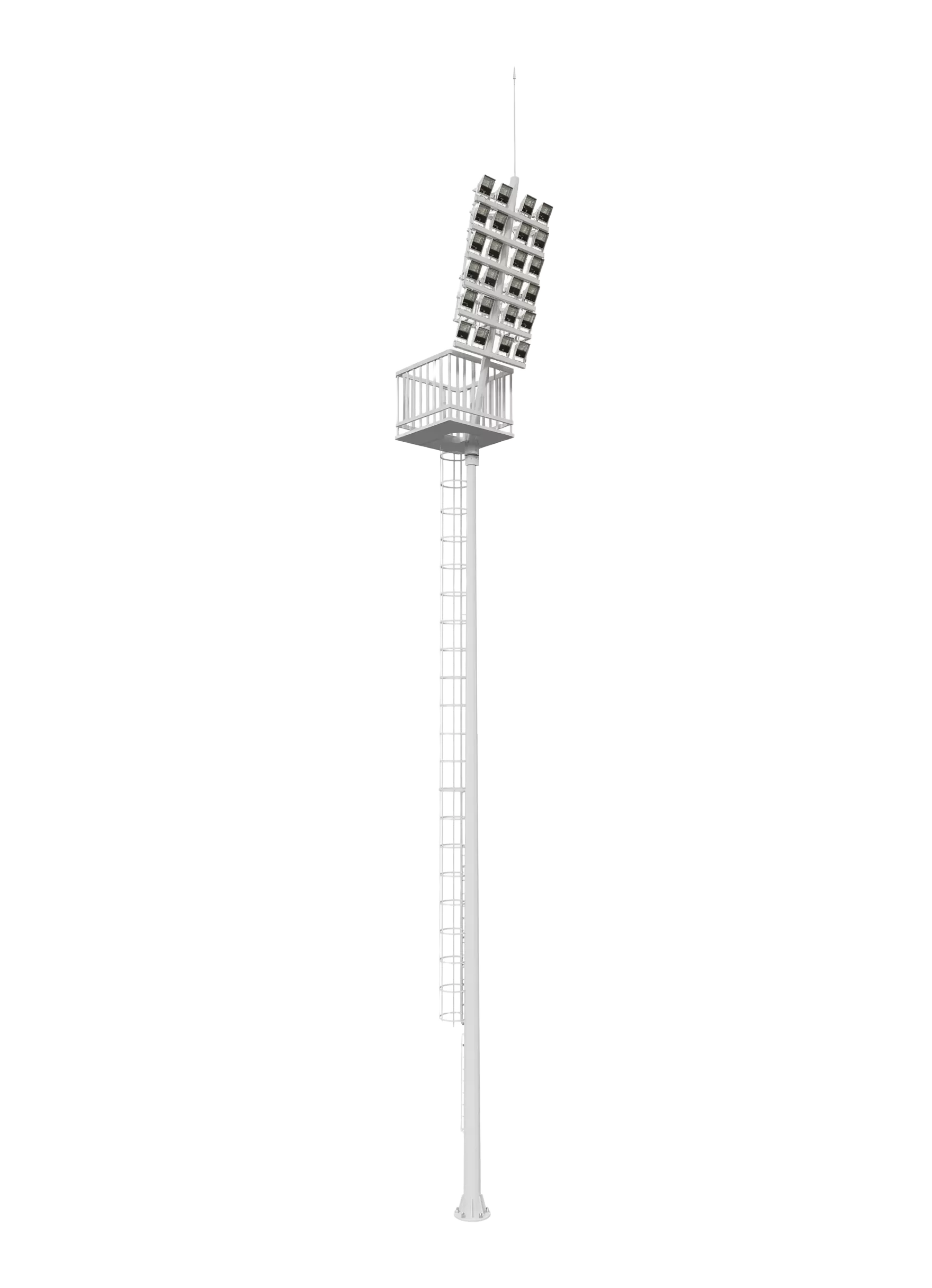
For projects requiring illumination from even greater heights, a high mast system may be more suitable than a conventional street lighting pole.
How Road Width Affects Pole Height
Road width is one of the main factors used to determine pole height.
General examples include:
Road or Area Type | Common Pole Height |
Pedestrian path or garden | 4–6m |
Residential road | 6–8m |
Urban street | 8–10m |
Main road | 10–12m |
Highway or large intersection | 12–15m |
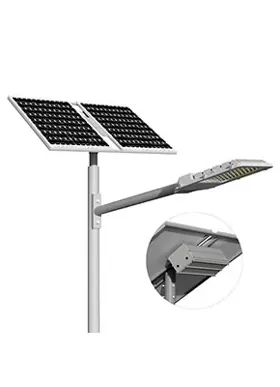
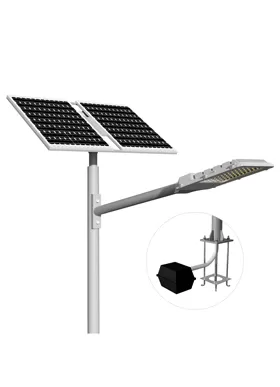
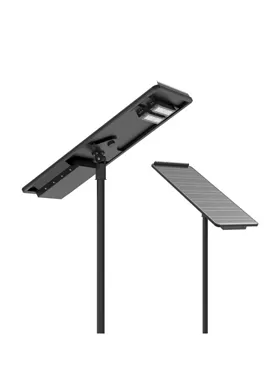
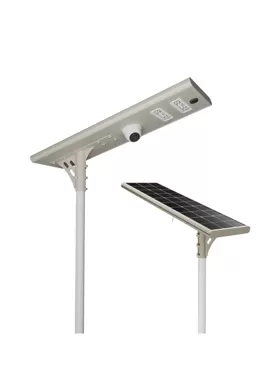
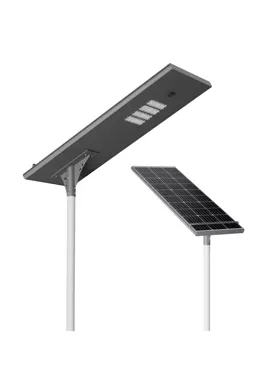
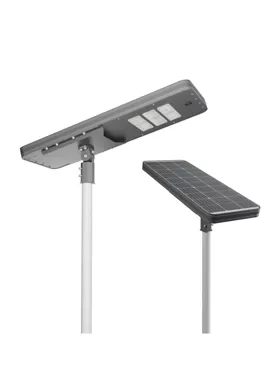
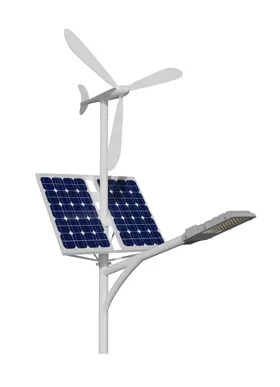
These ranges are only general references. The final solar street light pole height or conventional pole height must also consider the solar panel position, battery configuration and luminaire output.
Solar panels create additional wind resistance. As pole height increases, the panel size and angle become important structural considerations.
Pole Spacing and Mounting Height
Pole spacing and pole height must be planned together.
Shorter poles usually require closer spacing, while taller poles may allow wider spacing. However, spacing depends on the fixture beam distribution and target illumination level.
If the spacing is too wide:
· Dark zones may appear
· Uniformity may decrease
· Pedestrian and driving visibility may be affected
If the spacing is too narrow:
· More poles are required
· Installation costs increase
· Energy consumption may rise
· Lighting may become unnecessarily bright
A professional lighting simulation can compare different heights, wattages and spacing arrangements before production begins.
Other Factors to Consider
In addition to height, buyers should confirm several related specifications.
Wind Speed
Taller poles experience greater wind loads. The local design wind speed should always be supplied to the manufacturer.
Steel Grade and Thickness
Q235 may be suitable for many standard poles, while Q345 may be selected for taller or more demanding structures. Thickness should be calculated rather than selected randomly.
Surface Treatment
Hot-dip galvanizing protects the steel against outdoor corrosion. Powder coating may be added for colour and improved appearance.
Arm Configuration
Single-arm poles are commonly installed along one side of a road. Double-arm poles are often used on central medians.
Foundation Design
Foundation size depends on pole height, wind pressure, fixture weight, base plate dimensions and soil conditions.
FAQ
Is an 8m pole suitable for a residential road?
Yes. An 8m pole is often suitable for wider residential roads or community streets requiring greater lighting coverage than a 6m pole.
What pole height is commonly used for main roads?
Main roads commonly use 10m or 12m poles, depending on road width, fixture output, pole spacing and required illumination.
Can a 15m pole be used instead of a high mast pole?
A 15m pole may be suitable for highways and large intersections. For larger areas requiring multiple luminaires at greater heights, a high mast system may be more appropriate.
Does a taller pole require a thicker wall?
Usually, taller poles require stronger structural designs. However, the required wall thickness also depends on steel grade, diameter, fixture load and wind speed.
How is the correct pole spacing calculated?
Pole spacing is determined using pole height, luminaire power, beam angle, road width and required lighting uniformity. Lighting simulation is recommended.
Can light pole height be customised?
Yes. Pole height, diameter, wall thickness, bracket design and surface treatment can be customised according to project requirements.
Conclusion
The correct light pole height depends on the application rather than a single standard measurement. A 6m pole is generally suitable for pathways and residential areas, while 8m and 10m poles are commonly used for urban roads and commercial projects. Wider roads, highways and large public areas may require 12m or 15m poles.
Before ordering, buyers should evaluate road width, luminaire output, pole spacing, wind conditions, arm configuration and foundation requirements.
By providing complete project information, buyers can work with Phoebus Lighting to select a pole height that balances lighting performance, structural safety and project cost.

 English
  français
  Deutsch
  Español
  русский
  português
  العربية
  Afrikaans
  עברי
עברי  Latinae
  Pilipino