A successful high mast light pole installation requires more than lifting a tall steel pole onto a concrete base. The foundation, anchor bolts, pole sections, LED luminaires, lowering mechanism, electrical cables, and control system must all be installed according to approved structural and electrical drawings.
Because high mast poles are commonly used in ports, airports, highway interchanges, logistics yards, industrial facilities, and large parking areas, installation errors can affect structural safety, lighting performance, and future maintenance. This guide explains the main stages of high mast pole installation, from site preparation to final commissioning.
The following information is intended as a general project guide. Every high mast light installation should be completed by qualified construction, lifting, and electrical personnel using the manufacturer's drawings and a site-specific method statement.
What Should Be Checked Before High Mast Installation?
Installation planning should begin before the pole and lighting equipment arrive at the construction site. The project team should confirm the mast location, foundation design, underground services, equipment access route, and crane operating area.
The following information should be reviewed before work begins:
Approved pole height and structural drawings
Design wind speed and site exposure conditions
Foundation dimensions and reinforcement details
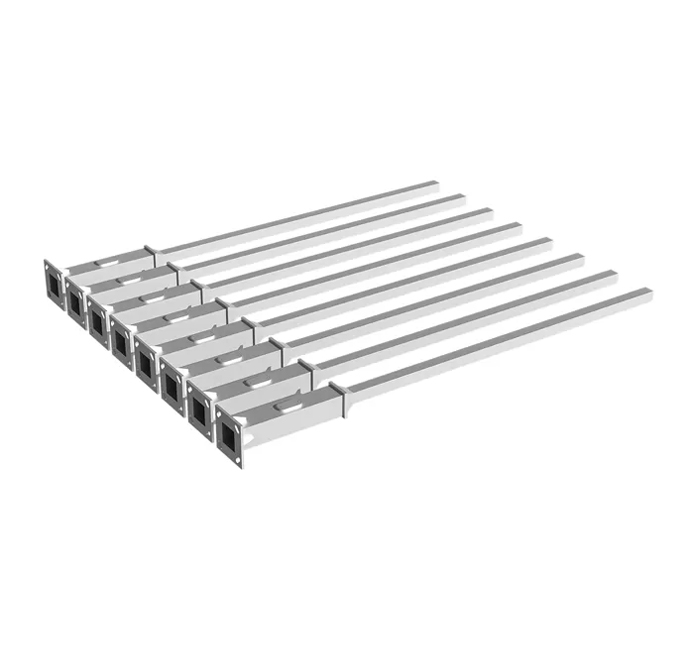
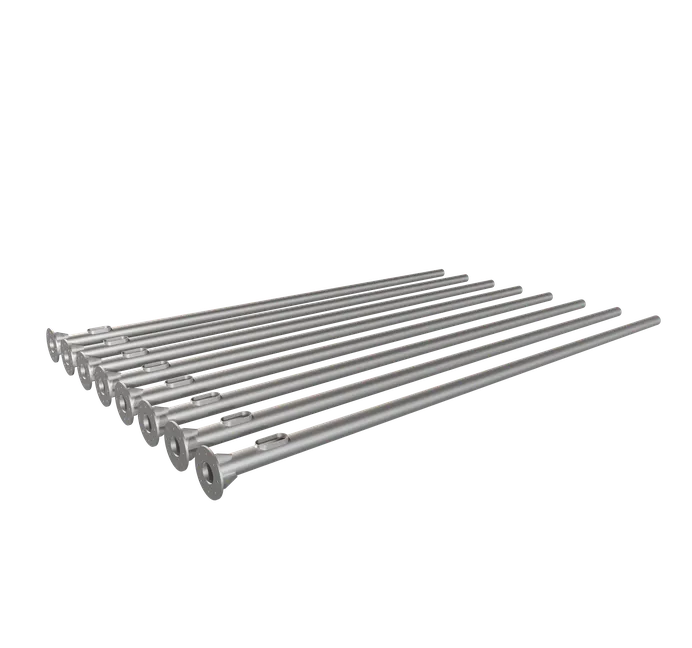
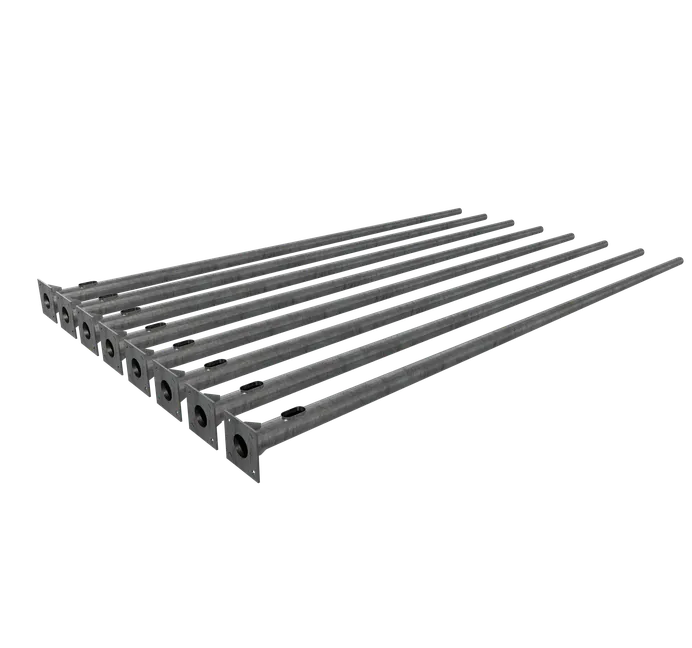
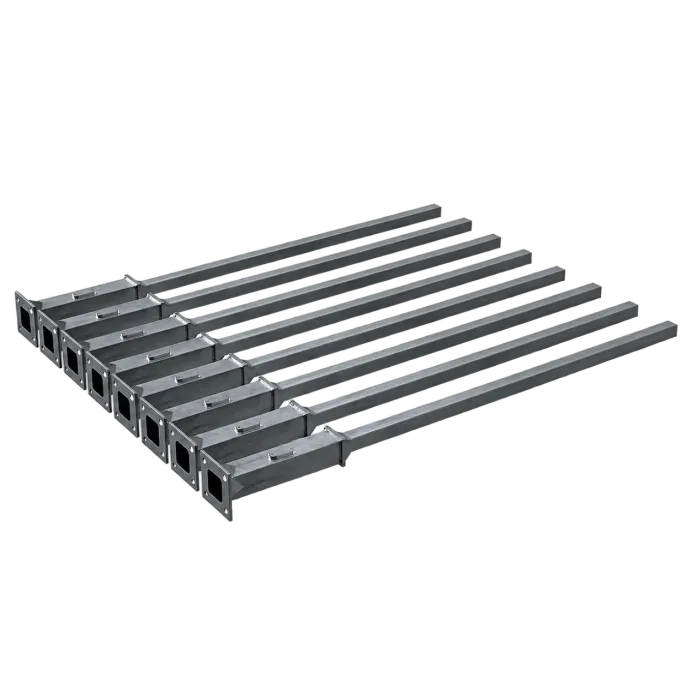
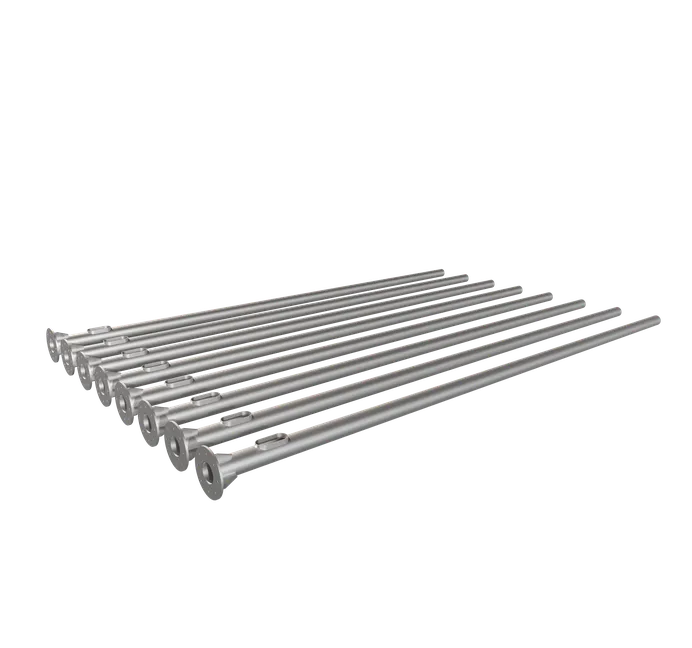
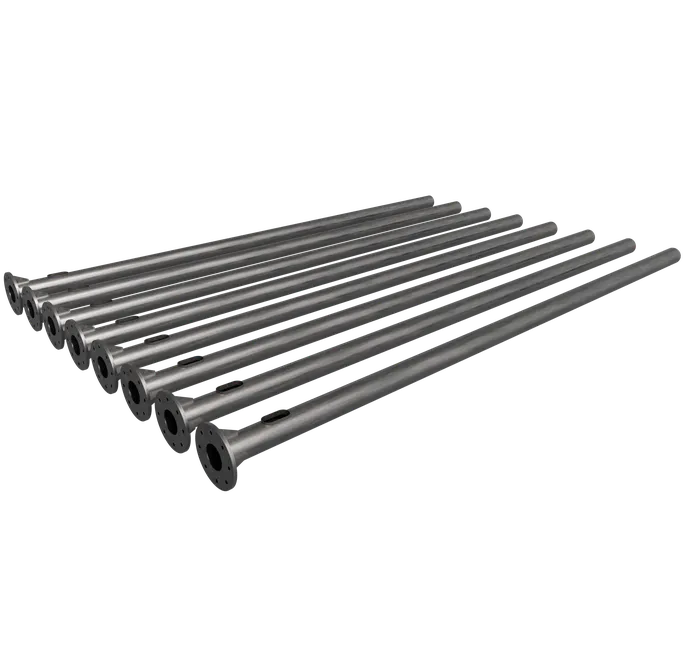
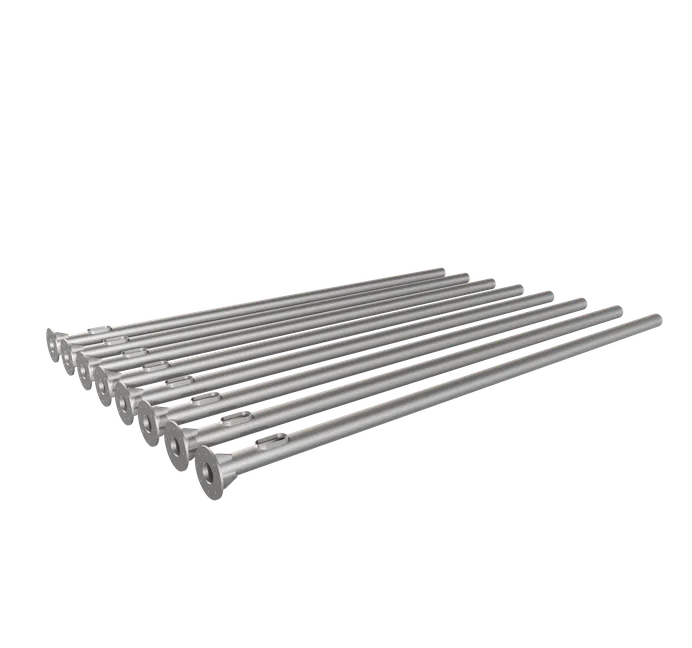
Anchor bolt size, position, and projection height
Total pole and luminaire assembly weight
Crane capacity at the required lifting radius
Location of underground cables, pipes, and drainage systems
LED fixture quantity, wattage, optics, and aiming plan
Electrical supply voltage and control method
Access requirements for future maintenance
The installation area should also be checked for overhead power lines, buildings, cranes, trees, and other obstructions. The crane platform must provide adequate support, and the lifting route should be planned so that the pole can be raised without passing over unnecessary personnel, vehicles, or equipment.
High Mast Installation Sequence
| Installation Stage | Main Work | Key Inspection Point |
|---|
| Site preparation | Survey the location and prepare equipment access | Position, ground condition, and underground services |
| Foundation construction | Install reinforcement, conduits, and anchor bolts | Dimensions, bolt alignment, and concrete strength |
| Pole assembly | Join pole sections and install internal components | Section overlap, alignment, and surface condition |
| Lighting assembly | Install luminaires, brackets, cables, and lowering ring | Fixture orientation, cable routing, and fastener security |
| Pole erection | Rig, lift, position, and secure the assembled mast | Crane capacity, mast verticality, and base connection |
| Electrical connection | Connect power, grounding, and control circuits | Insulation, continuity, and protective devices |
| Commissioning | Test luminaires, controls, and lifting equipment | Operation, lux distribution, and final documentation |
How Is the High Mast Foundation Installed?
The foundation transfers the mast weight and wind-induced loads into the ground. Its dimensions should be determined by a qualified engineer using the pole height, wind load, equipment weight, and soil conditions. A standard foundation copied from another project may not be suitable for a different location.
Construction normally begins with surveying and excavation. The reinforcement cage, cable conduits, grounding connection, and anchor bolt assembly are then positioned according to the approved drawing.
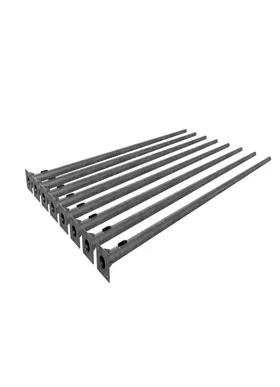
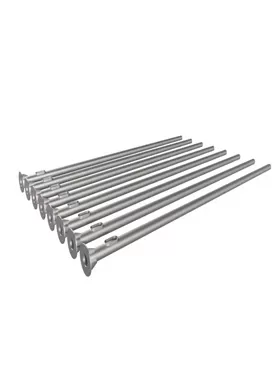
An anchor bolt template helps maintain the correct bolt spacing and orientation during concrete placement. Before pouring concrete, installers should check that:
The anchor bolt circle matches the mast base flange.
The bolts are vertical and securely supported.
The required bolt projection is maintained.
Electrical conduits enter the correct part of the foundation.
The reinforcement and grounding system match the design.
The top elevation and foundation centerline are correct.
The foundation should not be loaded until the concrete has reached the strength specified by the project engineer. Installing the mast too early can damage the concrete, disturb the anchor bolts, or reduce foundation performance.
How Are High Mast Pole Sections Assembled?
High mast poles are often delivered in several tapered steel sections to simplify manufacturing and transportation. These sections are usually assembled horizontally near the foundation before erection.
Place the pole sections on stable supports to prevent direct contact with mud, stones, or uneven ground. Check each section for transport damage, deformation, or coating defects before assembly.
For slip-joint structures, the smaller section is inserted into the larger section to the overlap length specified in the manufacturer's drawing. The sections must remain correctly aligned during this process. Using an incorrect overlap length or applying force at unsuitable points can affect the structural connection.
Internal power cables, winch cables, and other components should be routed without sharp bends, crushing, or contact with damaging edges. The access door should remain correctly oriented so that technicians can safely reach the electrical and lifting equipment after the mast is installed.
How Are LED Fixtures and the Luminaire Ring Installed?
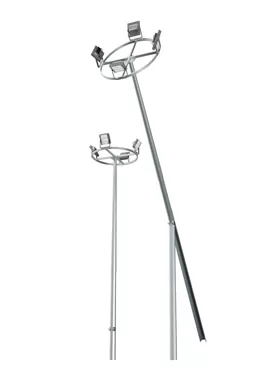
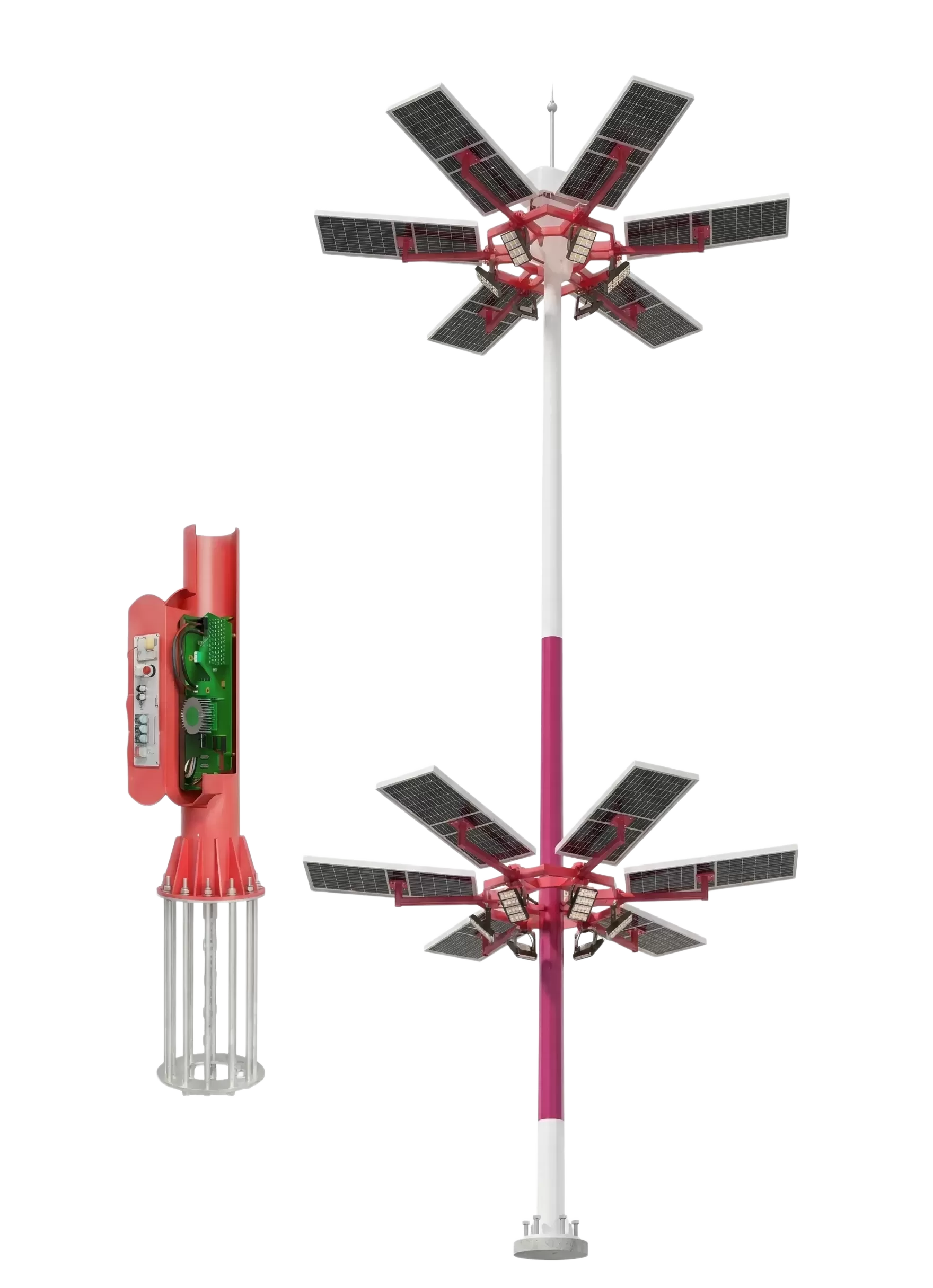
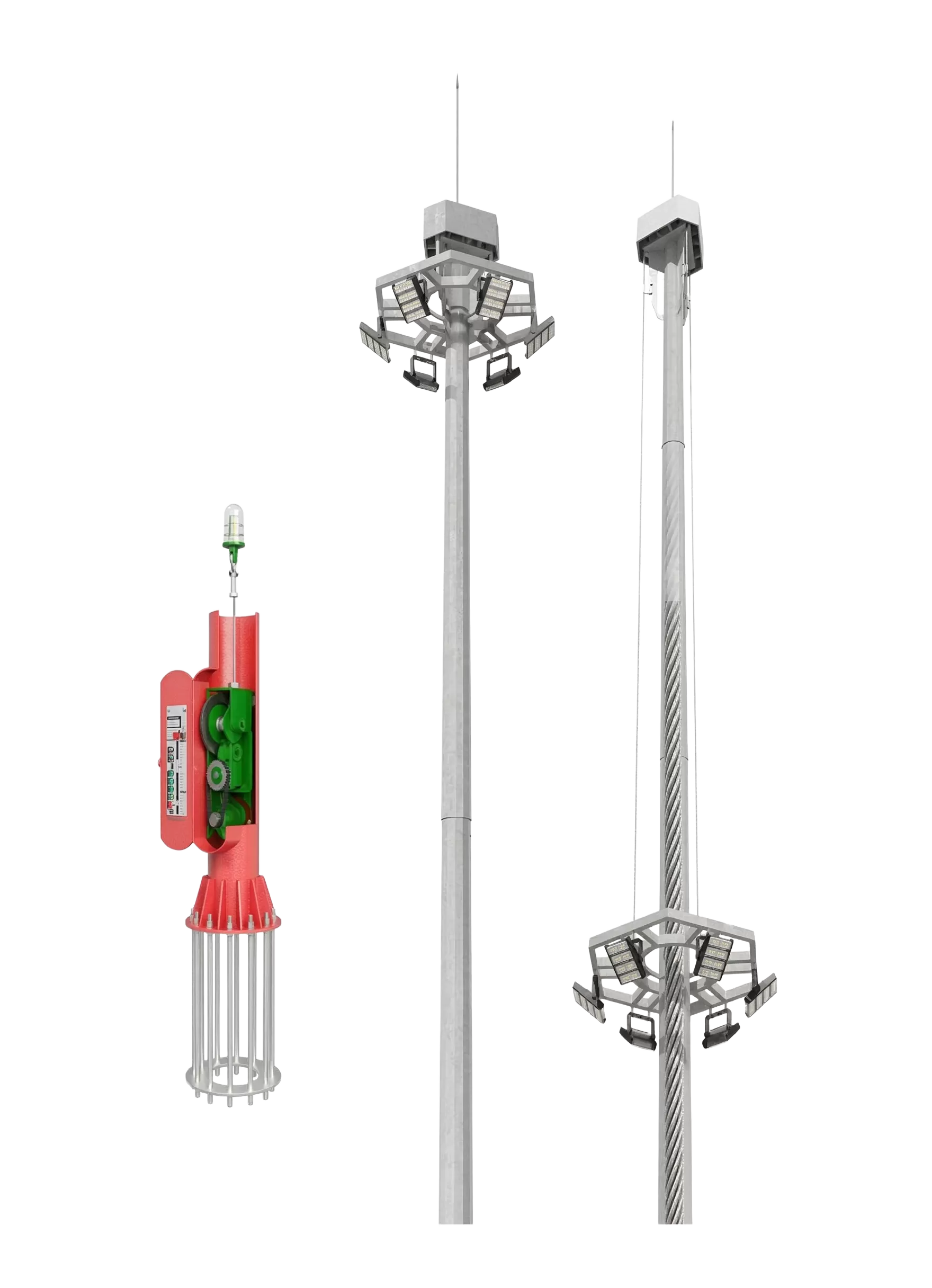
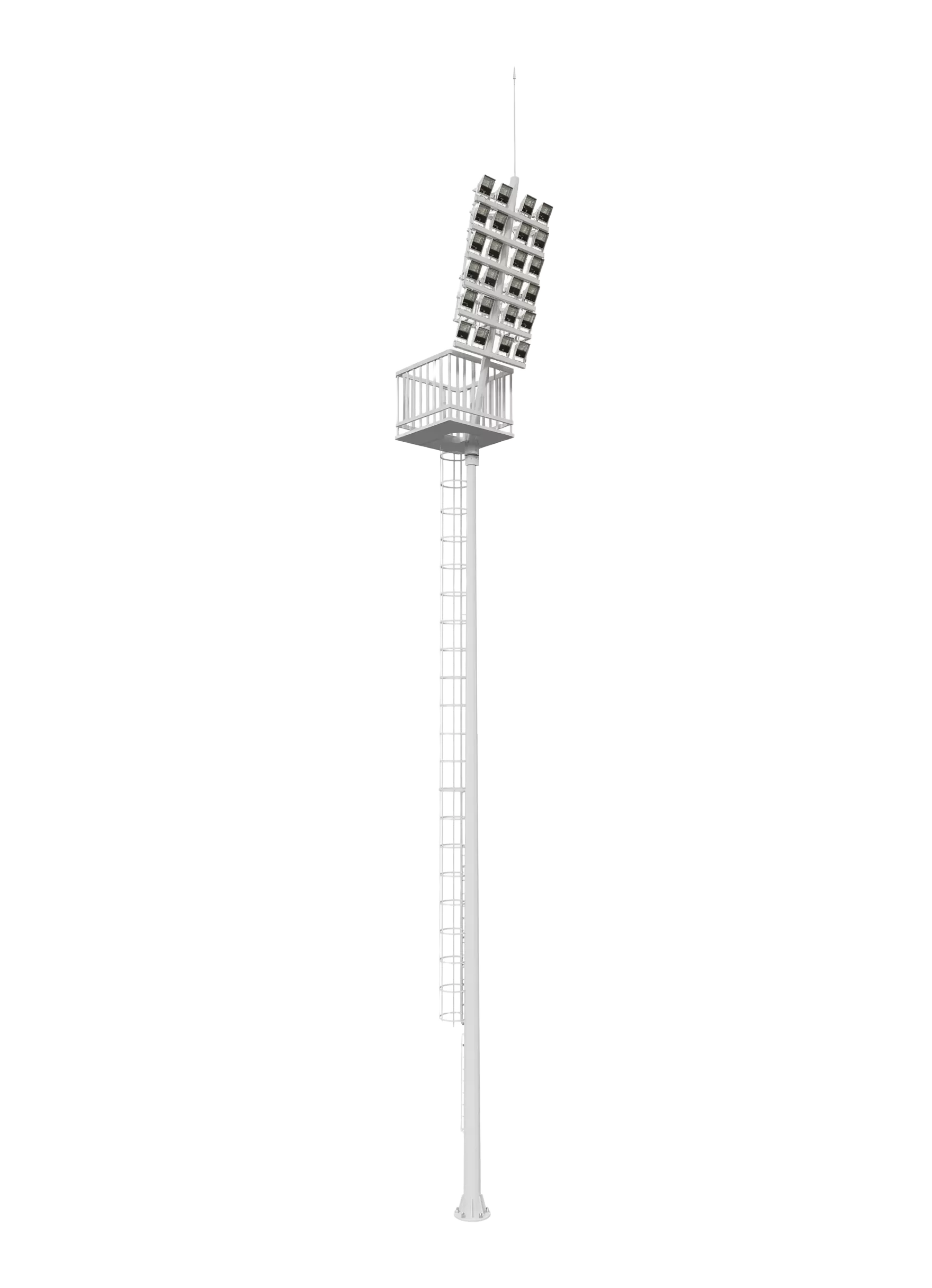
The fixture assembly depends on whether the project uses a fixed-head mast, a lowering-ring system, or a platform with a safety cage ladder.
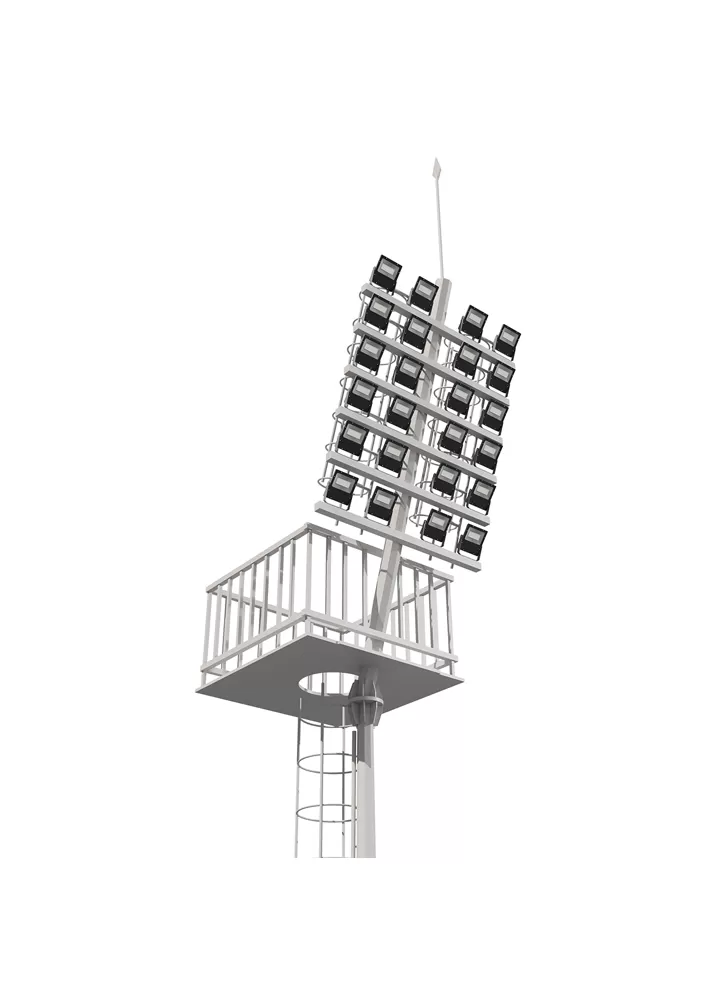
On a fixed system, the brackets and LED floodlights may be installed before the pole is raised, provided the lifting plan accounts for their additional weight and wind area. In other projects, the fixtures may be installed after erection using suitable access equipment.
For a lifting-system high mast, installers normally assemble the luminaire ring, LED fixtures, junction boxes, and flexible cables at ground level. The wire ropes, pulleys, guide components, and locking mechanism must be installed according to the manufacturer's arrangement.
Each LED high mast light should be positioned according to the photometric layout. Fixture aiming should not be estimated visually without reference to the lighting design. Incorrect tilt or rotation can cause dark areas, excessive overlap, glare, or light spill outside the project boundary.
How Is a High Mast Light Pole Erected?
Pole erection is one of the most critical stages of high mast installation. The lifting contractor should prepare a lift plan based on the total assembled weight, center of gravity, crane position, working radius, wind conditions, and available ground support.
The lifting points and rigging method must be suitable for the pole structure. Protective materials may be used where slings contact the galvanized or coated surface. Tag lines can help control unwanted rotation when permitted by the approved lifting method.
During erection:
Only required lifting personnel should enter the controlled area.
No worker should stand directly beneath the suspended mast.
The crane operator and signal person should maintain clear communication.
The pole should be raised gradually and monitored for uncontrolled movement.
Weather and wind conditions should remain within the lift-plan limits.
After the mast is positioned over the anchor bolts, it is lowered carefully onto the base. Nuts and washers are installed according to the structural drawing. The mast verticality should then be checked from more than one direction before final tightening and grouting.
The required tightening procedure and torque values depend on the anchor bolt design. Installers should follow the approved engineering schedule rather than using one general torque value for every high mast tower installation.
How Are the Electrical and Grounding Systems Connected?
Electrical work should be completed by qualified personnel after the mast is mechanically secured. The incoming power cable is normally connected to the distribution or control equipment inside the access compartment.
The electrical installation may include:
Incoming supply cables
Branch circuits for individual luminaires
Circuit breakers or fuses
Surge protection devices
Contactor, timer, or photocell controls
Motor and control circuits for the lowering system
Protective grounding and bonding conductors
Cables should be identified and supported so that they are not placed under excessive tension. The grounding connection should include the pole body, control equipment, and other exposed conductive parts as required by the project design.
Before energizing the system, technicians should complete insulation-resistance, continuity, grounding, and circuit-protection checks. Any abnormal reading should be investigated before the luminaires or lifting motor are operated.
How Is a Lifting-System High Mast Commissioned?
A lowering mechanism must be tested carefully before the installation team leaves the site. The winch, motor, wire ropes, pulleys, guide system, and locking devices should operate smoothly throughout the complete travel distance.
The ring should remain level while moving. Uneven movement, abnormal noise, cable interference, or failure of the locking system requires immediate inspection. Installers should not repeatedly operate the system in an attempt to force it past an obstruction.
Commissioning should verify:
Correct raising and lowering direction
Synchronized wire-rope movement
Operation of upper and lower travel limits
Correct engagement of the locking mechanism
Stable electrical supply to the luminaires
Safe manual operation during a power interruption, when provided
The operating procedure should be handed over to the maintenance team. Access keys, control tools, wiring diagrams, and manufacturer instructions should be stored in a known and secure location.
What Should Be Inspected After High Mast Light Installation?
The final inspection should cover both structural and lighting performance. Completing the mechanical installation does not confirm that the system provides the required illumination.
A practical handover checklist includes:
Mast position, height, and verticality
Foundation condition and grout placement
Anchor bolt tightening and exposed-thread protection
Condition of galvanized or coated surfaces
Access-door security and internal cable arrangement
LED fixture position and aiming direction
Control, timer, and photocell operation
Grounding and electrical test records
Lowering-system commissioning results
Nighttime lux and uniformity measurements
Any transport or installation damage to the protective surface should be repaired using an approved method. Final photographs, test reports, and as-built drawings should also be included in the handover documents.
Common High Mast Installation Mistakes
Using an unverified foundation design: Foundation dimensions must reflect local soil and wind conditions.
Misaligning anchor bolts: Incorrect bolt spacing can prevent the base flange from fitting properly.
Installing before concrete reaches the specified strength: Early loading may damage the foundation.
Ignoring the lifting radius: Crane capacity changes according to boom length and working radius.
Incorrectly aiming LED fixtures: Small angle errors can significantly affect lighting distribution.
Damaging internal cables: Cables can be crushed or twisted during pole-section assembly.
Skipping lowering-system tests: Mechanical problems should be identified before project handover.
Failing to verify lux levels: Visual inspection alone cannot confirm compliance with the lighting design.
Frequently Asked Questions About High Mast Light Pole Installation
How long does high mast pole installation take?
The schedule depends on the foundation, pole height, system type, site access, and crane availability. Pole erection may be completed quickly, but foundation construction, concrete strength development, electrical work, and commissioning require additional time.
Can a high mast pole be installed without a crane?
Most permanent high mast poles require suitable lifting equipment because of their height and assembled weight. The crane and rigging plan should be selected by qualified lifting professionals.
Should LED fixtures be installed before or after pole erection?
Either method may be used depending on the mast design and lifting plan. Fixtures on a lowering ring are commonly assembled at ground level, while some fixed systems may require elevated installation equipment.
How is the correct foundation size selected?
The foundation is calculated using mast height, equipment weight, wind load, soil properties, and structural design requirements. The supplier's pole data and the local engineer
s foundation design should be coordinated.
How do installers confirm that the pole is vertical?
Verticality is checked from multiple directions using suitable surveying instruments. Adjustments should be completed before final anchor-bolt tightening and base grouting.
Does PHB Lighting provide installation support?
PHB Lighting can provide product drawings, foundation information, electrical diagrams, and system-specific installation guidance for high mast projects. Buyers should submit the mast type, project location, and site requirements before installation planning begins.
Conclusion
A safe and reliable high mast light pole installation depends on coordinated foundation engineering, pole assembly, crane lifting, electrical work, and commissioning. Each stage should follow approved project drawings rather than relying on general experience alone.
Before beginning a high mast light installation, confirm the site conditions, mast configuration, foundation details, crane capacity, fixture layout, and maintenance method. Careful planning reduces installation delays, protects the equipment, and helps the completed lighting system achieve its required structural and photometric performance.


 English
  français
  Deutsch
  Español
  русский
  português
  العربية
  Afrikaans
  עברי
עברי  Latinae
  Pilipino