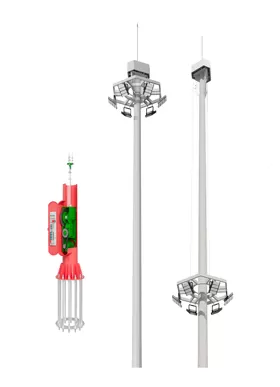
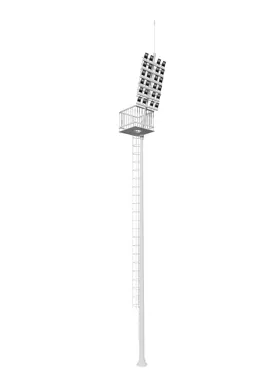
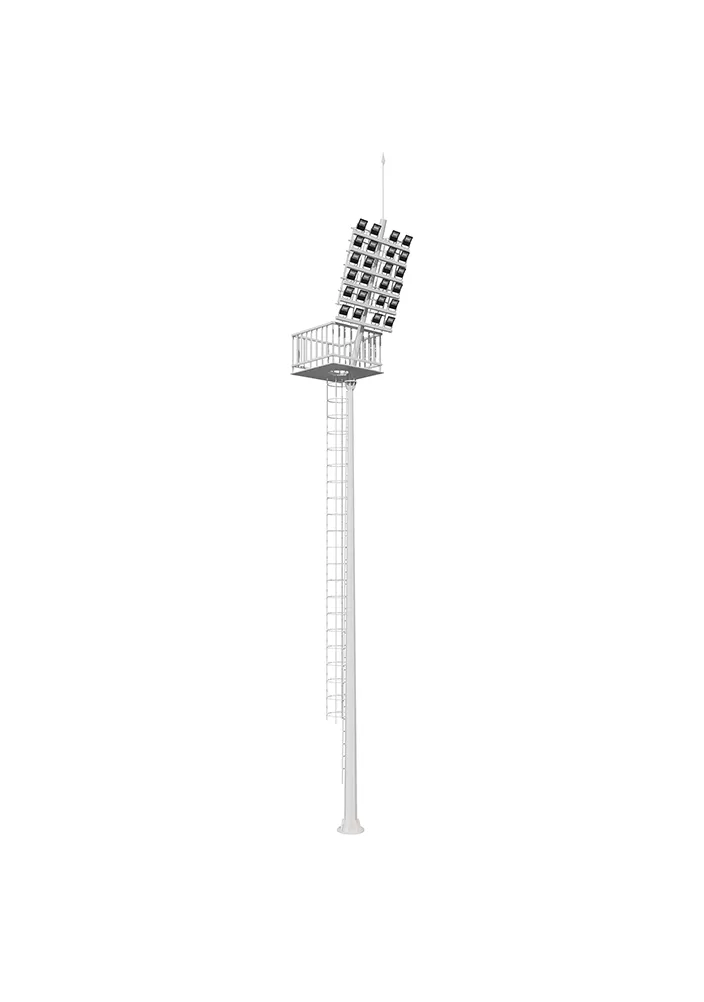
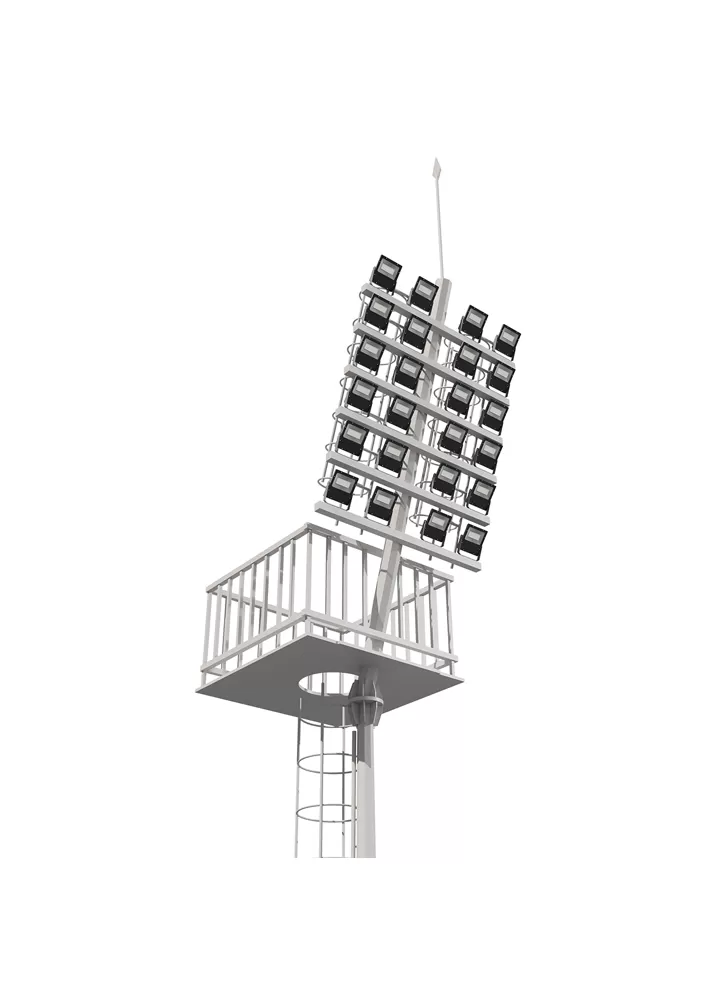
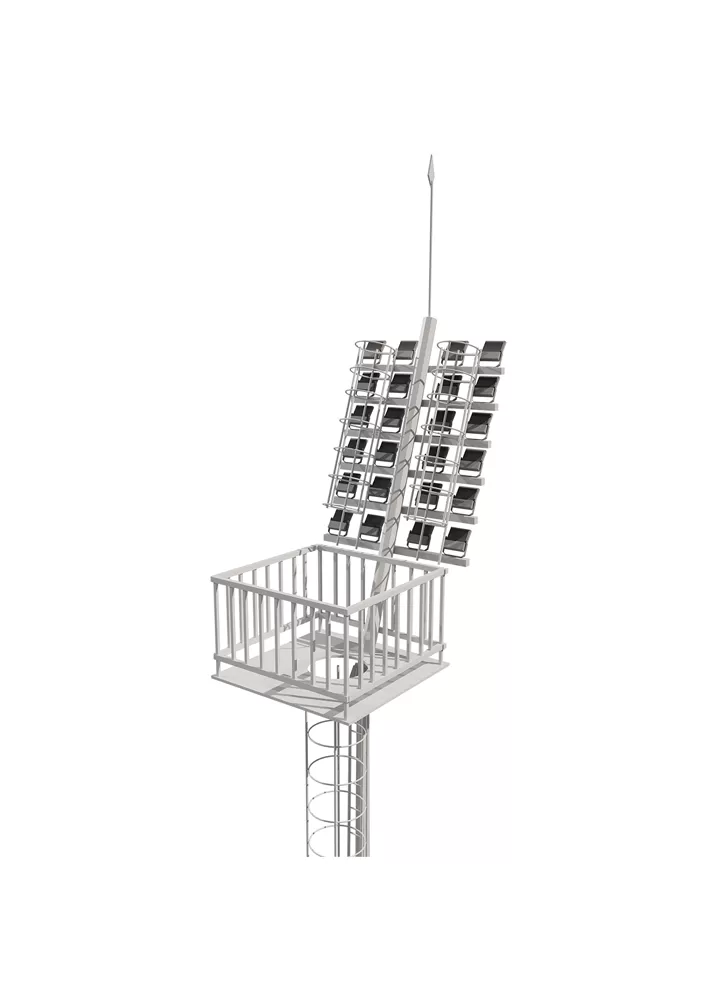
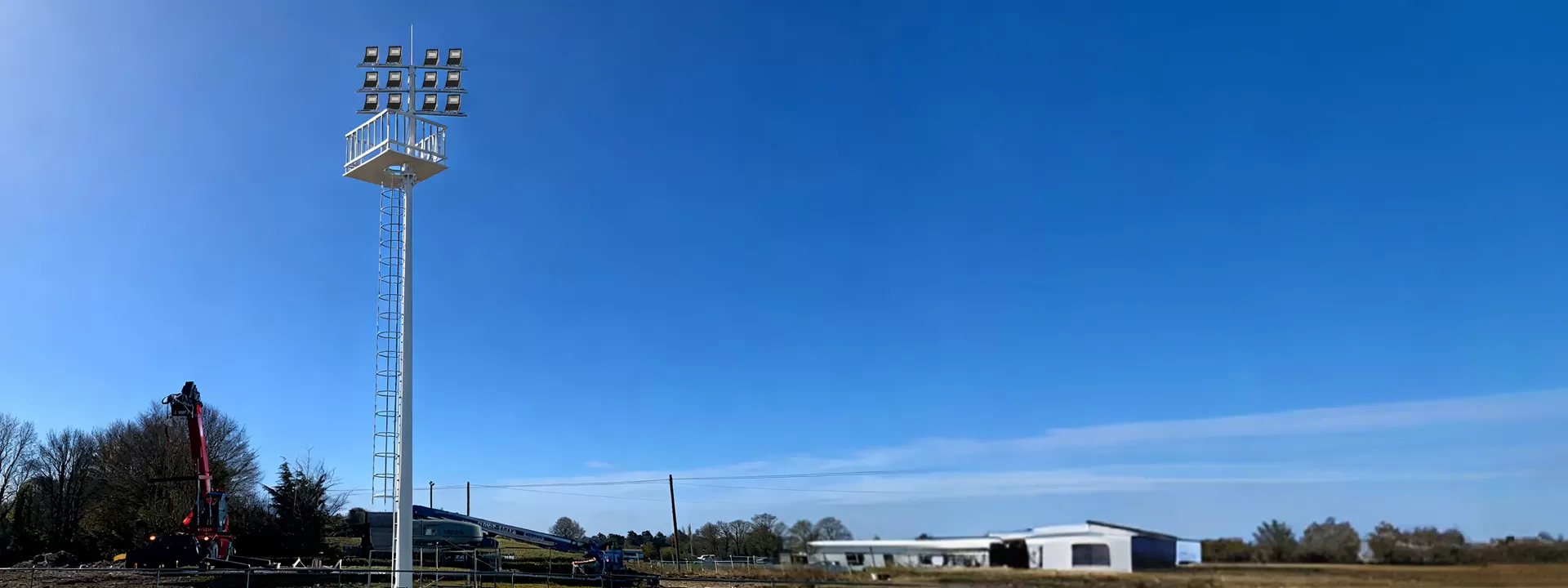
By providing stable access for high-altitude maintenance, the cage ladder replaces aerial work platforms and lifting systems. This lowers the risk of falls from unprotected heights.
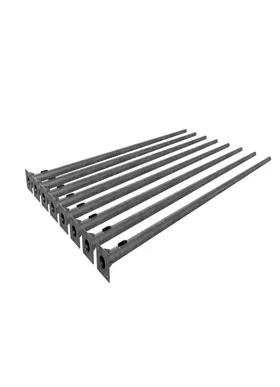
Phoebus high mast with safety cage ladder fills the cost and applicability gap of lift-type high mast lights by providing more structural stability and compatibility with medium- and low-height high mast lights in remote locations and areas with frequent strong winds.
Production and installation costs are lower because the structure is less complicated than lift-type lights. The cage ladder and light pole's integrated high-strength structure is resistant to corrosion and wind, which lowers the cost of ongoing maintenance.
Maintenance staff and equipment determine the primary load capacity. To avoid overloading brought on by multiple people working at once, the standard design can accommodate one to two adults (including their tools).
High-strength steel is used to make the cage ladder. Welding is used to strengthen the handrails, connectors, and steps. Heavy maintenance tools can be moved with certain high-end models that can support more than 300 kg.
Load capacity standards ensure compliance in various regions by adhering to industry regulations, such as Chinese GB/T standards and EU EN standards. Cage ladders for ultra-high poles (over 30 meters) have reinforced load-bearing design, and load capacity redundancy is adjusted based on the height of the light pole.
To avoid overloading and guarantee safety during high-altitude operations, the actual load capacity is prominently displayed on the cage ladder.