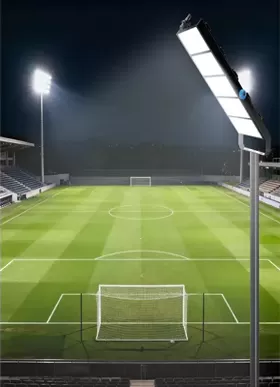
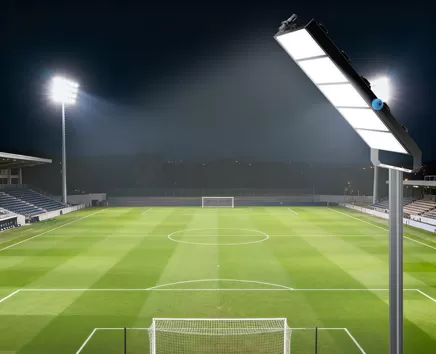
Low Glare and Interference Prevention: A large elevation angle installation and anti-glare lens design ensure that the light does not shine directly into the eyes of athletes and judges, meeting the flicker-free requirements of slow-motion playback and high-definition cameras.
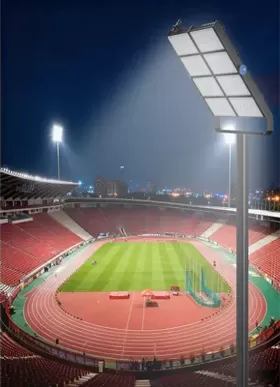
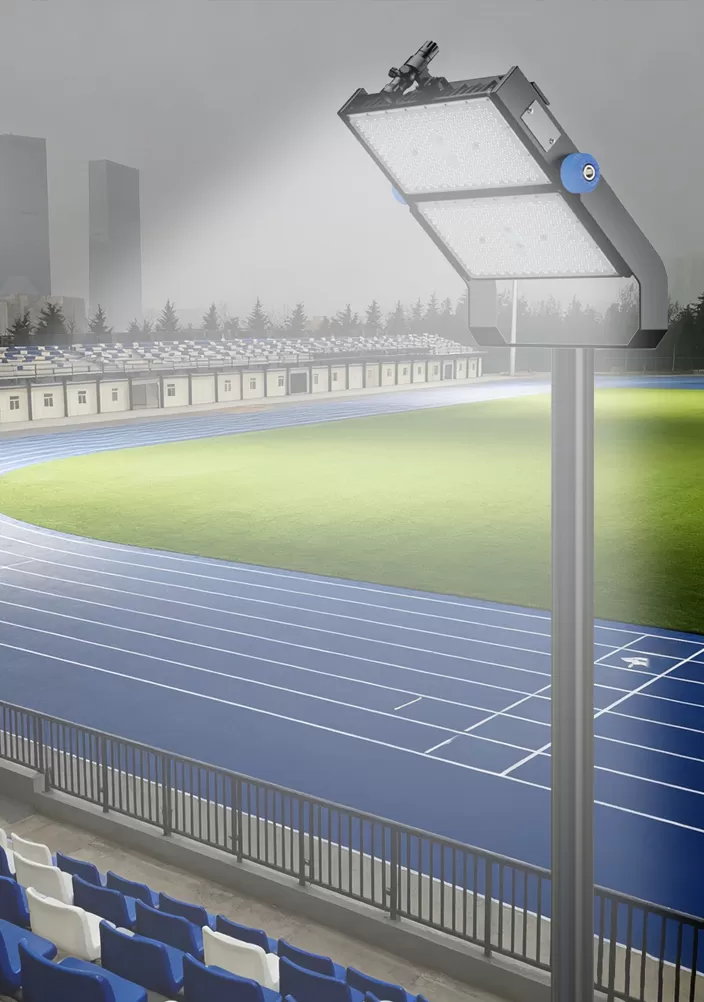
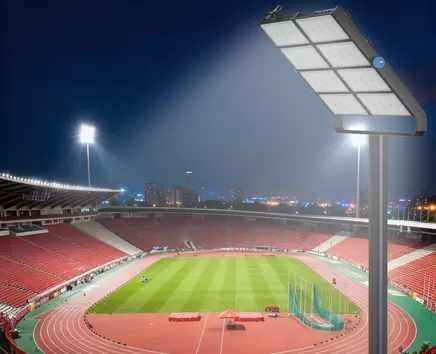
Accurate Zoned Lighting: Tracks require linear, consistent lighting with no dark spots. Field events, particularly throwing and jumping areas, require improved vertical illumination to prevent athletes' or equipment's shadows from influencing judges' decisions.
Superior Weather Resistance: The lamp body has an IP65 or higher protection rating, allowing it to withstand extreme outdoor conditions such as intense heat, torrential rain, and lightning, making it suitable for all-weather use on sports fields.
Supports Time-Based and Zoned Dimming: During training sessions and full-load operation during competition periods, more than 40% less energy is used than with conventional lighting, resulting in significant cost savings.
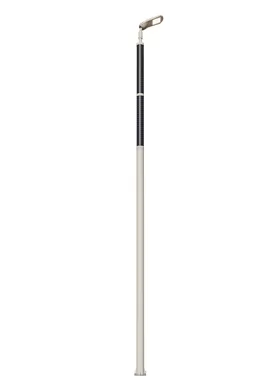
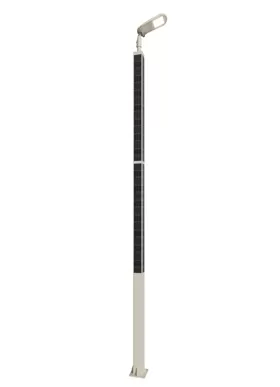
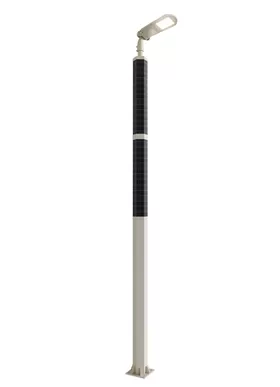
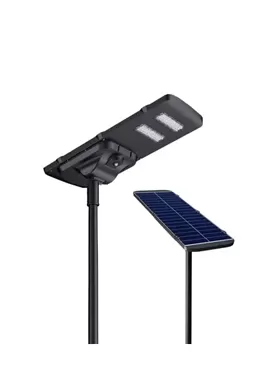
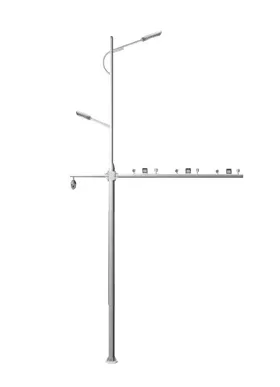
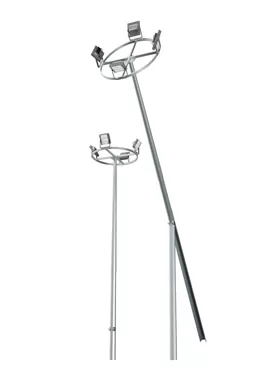
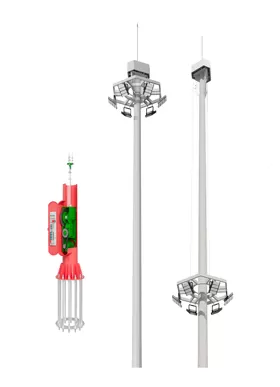
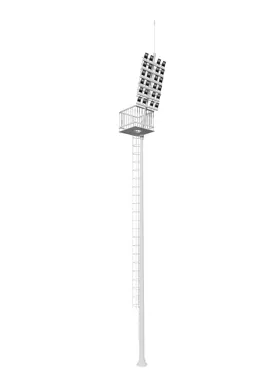
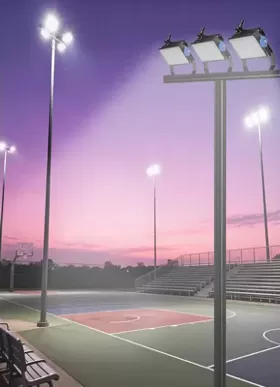
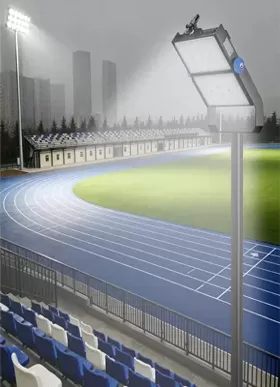
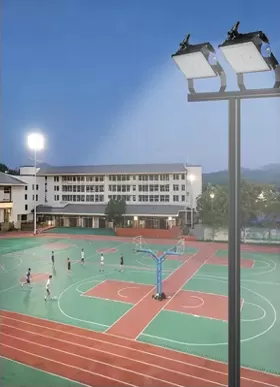
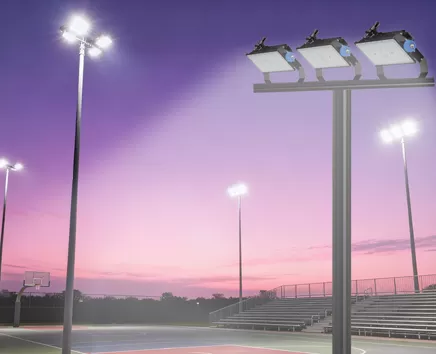
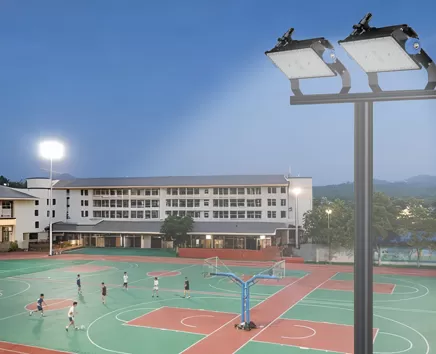
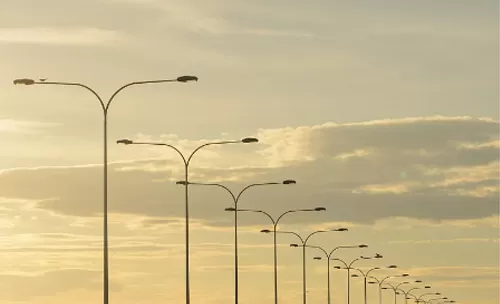
Standard athletic fields have a four-corner layout with 25 to 40-meter-high light poles. These poles are outfitted with high-power LED floodlights that cast light from various angles across the track and inner field. To improve vertical illumination and protect athletes from shadows, more side-mounted auxiliary light poles 10-15 meters high can be added to field event jumping areas (long jump and high jump).
For event video playback, the track area must have an illuminance uniformity of at least 0.8 and a glare value of less than 20. To avoid direct light from the judges' and spectator stands, the lights' projection angle must be carefully considered during layout.